
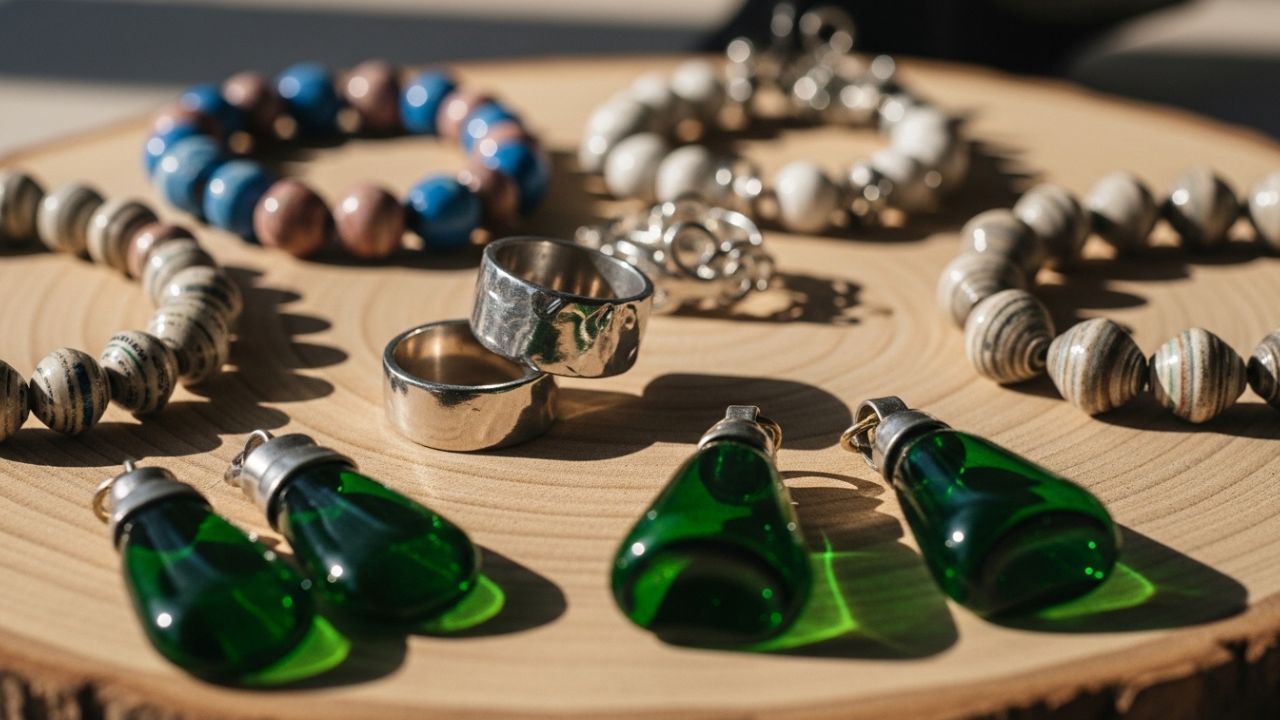
In a world increasingly aware of environmental challenges, fashion has begun to redefine itself. No longer is beauty judged solely by sparkle or luxury; it is now intertwined with responsibility, innovation, and ethics. Among the most compelling movements within sustainable fashion is jewelry made from recycled materials — a creative revolution that transforms waste into wearable art. 🌍✨
Jewelry has always held symbolic power. It represents identity, culture, love, status, rebellion, and memory. Traditionally, it has been crafted from precious metals and gemstones extracted through mining processes that often leave deep environmental and social footprints. Today, however, artists and designers are reimagining what jewelry can be. Instead of newly mined gold or silver, they are using discarded plastics, paper, glass, metal scraps, textiles, electronic components, and even ocean debris to create pieces that are as meaningful as they are beautiful.
Recycled jewelry is not simply a trend; it is a response. It responds to pollution, overconsumption, and the fast-fashion cycle. It challenges the notion that value depends on rarity or cost. It invites us to see beauty in what was once considered useless. This article explores the materials, techniques, environmental benefits, cultural impact, business opportunities, and future of jewelry made from recycled materials. Along the way, we will discover how creativity and sustainability can coexist harmoniously — and stylishly. 💚
1. Understanding Recycled Jewelry
1.1 What Is Recycled Jewelry?
Recycled jewelry refers to adornments created from materials that have been previously used, discarded, or repurposed. These materials may come from:
- Household waste
- Industrial leftovers
- Second-hand objects
- Natural debris
- Electronic waste (e-waste)
- Vintage or broken jewelry
The goal is to extend the lifecycle of materials rather than extracting new resources. This process reduces environmental strain while encouraging artistic innovation.
1.2 Recycled vs. Upcycled
Although often used interchangeably, these terms differ slightly:
| Term | Definition | Example |
|---|---|---|
| Recycled ♻️ | Material is broken down and reprocessed into something new | Melting scrap silver to form new earrings |
| Upcycled 🔁 | Material is transformed into a higher-value item without breaking it down completely | Turning old denim into fabric necklaces |
Both approaches are common in sustainable jewelry design.
2. Common Recycled Materials Used in Jewelry
Recycled jewelry can be made from nearly anything. Designers are constantly discovering new possibilities in everyday objects.
2.1 Recycled Metals 🔩
Metals are among the most widely recycled materials in jewelry.
Sources:
- Scrap industrial metal
- Old coins
- Broken jewelry
- Electronic components
Advantages:
- Durable
- Easily reshaped
- High resale value
- Infinite recyclability
Recycled gold and silver reduce the need for mining, which often involves toxic chemicals like cyanide and mercury.
2.2 Recycled Plastic 🧴
Plastic pollution is one of the most pressing environmental issues. Transforming plastic waste into jewelry helps divert it from landfills and oceans.
Sources:
- Bottle caps
- Plastic bags
- Packaging
- Ocean waste
Designers often melt, cut, or weave plastic to create colorful, lightweight pieces.
Creative Example:
- Layered melted plastic earrings resembling stained glass.
2.3 Recycled Paper and Cardboard 📜
Paper-based jewelry is surprisingly durable when sealed properly.
Sources:
- Magazines
- Newspapers
- Books
- Packaging
Techniques include:
- Rolling paper beads
- Folding origami shapes
- Layering and varnishing
Paper jewelry can be lightweight, affordable, and vibrant.
2.4 Recycled Glass 🍾
Glass can be crushed, melted, or reshaped into elegant components.
Sources:
- Bottles
- Windows
- Broken glassware
- Sea glass
Glass jewelry often resembles gemstones and can be polished to a brilliant shine.
2.5 Textile and Fabric Scraps 🧵
Fabric waste from fashion industries is immense. Repurposing these scraps reduces landfill contributions.
Materials:
- Denim
- Silk
- Cotton
- Lace
- Leather remnants
Techniques:
- Braiding
- Knotting
- Embroidery
- Wrapping beads
Textile jewelry often has a soft, tactile aesthetic.
2.6 Electronic Waste (E-Waste) 💻
Circuit boards, wires, and computer parts can be transformed into futuristic jewelry.
Sources:
- Old smartphones
- Broken computers
- Obsolete electronics
These materials offer:
- Unique colors (greens, gold traces)
- Geometric patterns
- Metallic textures
2.7 Natural Reclaimed Materials 🌿
Not all recycled materials are industrial.
Examples:
- Driftwood
- Fallen branches
- Coconut shells
- Seeds
- Shell fragments
These pieces often highlight organic shapes and sustainability.
3. Techniques Used in Recycled Jewelry Making
Recycled jewelry requires both traditional craftsmanship and experimental methods.
3.1 Melting and Casting 🔥
Used primarily for metals and plastics. Scrap material is melted and poured into molds.
3.2 Cold Connections 🔗
Instead of soldering, designers use rivets, screws, or wire wrapping to connect components.
3.3 Weaving and Braiding 🧶
Plastic strips, fabric, or wires can be woven into intricate forms.
3.4 Resin Encapsulation 💎
Small recycled fragments (paper, plastic, metal bits) are sealed in clear resin.
3.5 Hand-Cutting and Shaping ✂️
Glass, metal sheets, or plastic are cut and polished into wearable forms.
4. Environmental Benefits 🌍
Jewelry made from recycled materials significantly reduces environmental impact.
4.1 Reduction of Waste
By reusing materials:
- Landfill waste decreases
- Ocean pollution is reduced
- Microplastic spread slows
4.2 Lower Carbon Footprint
Mining and processing raw materials require:
- Heavy machinery
- Energy-intensive refinement
- Global transportation
Recycling reduces these emissions.
Environmental Comparison Table
| Factor | Traditional Jewelry | Recycled Jewelry |
|---|---|---|
| Raw Material Extraction | High | Minimal |
| Energy Consumption | High | Moderate to Low |
| Waste Production | Significant | Reduced |
| Environmental Damage | Mining scars, toxic runoff | Minimal disruption |
| Carbon Emissions | High | Lower |
5. Social and Ethical Impact 🤝
5.1 Ethical Labor
Mining industries are often associated with:
- Unsafe working conditions
- Child labor
- Conflict financing
Recycled jewelry avoids many of these ethical concerns.
5.2 Community Empowerment
Many recycled jewelry projects:
- Employ marginalized communities
- Support artisans
- Promote local economies
For example, coastal communities sometimes collect ocean plastic and transform it into jewelry, turning pollution into income.
6. Aesthetic Diversity 🎨
One misconception about recycled jewelry is that it looks “cheap.” In reality, it can be incredibly diverse.
6.1 Minimalist Designs
Polished recycled metal can look identical to newly mined metal.
6.2 Bold and Colorful Pieces
Plastic and paper offer vibrant possibilities.
6.3 Industrial Chic
E-waste jewelry has a futuristic appeal.
6.4 Natural and Rustic
Wood and shells create earthy elegance.
7. DIY Recycled Jewelry 🛠️
Creating recycled jewelry at home is accessible and affordable.
Basic Materials List
| Material | Tool Needed | Difficulty Level |
|---|---|---|
| Paper | Glue, varnish | Easy |
| Plastic bottles | Scissors, heat gun | Medium |
| Scrap metal | Pliers, file | Medium |
| Fabric | Needle, thread | Easy |
| Old jewelry parts | Pliers | Easy |
Simple Project Example: Paper Bead Necklace 📿
- Cut magazine pages into long triangles.
- Roll tightly around a toothpick.
- Glue the end.
- Seal with varnish.
- String onto thread.
Result: A colorful, lightweight necklace made from discarded magazines.
8. Business Opportunities 💼
Recycled jewelry offers strong entrepreneurial potential.
8.1 Low Startup Costs
Many materials are free or inexpensive.
8.2 Unique Branding
Consumers value sustainability and storytelling.
8.3 Growing Market Demand
Eco-conscious shoppers prefer ethical products.
Business Advantages Table
| Advantage | Explanation |
|---|---|
| Storytelling | Each piece has a history |
| Sustainability Appeal | Aligns with green values |
| Cost Efficiency | Low material cost |
| Market Differentiation | Unique, handcrafted feel |
| Scalability | Can grow from hobby to brand |
9. Challenges and Limitations ⚖️
Despite its benefits, recycled jewelry faces challenges.
9.1 Durability Concerns
Some materials (paper, thin plastic) require proper sealing.
9.2 Consumer Perception
Some buyers associate recycled materials with lower value.
9.3 Supply Consistency
Finding consistent material sources can be difficult.
10. Technological Innovation 🚀
Technology enhances recycled jewelry design.
10.1 3D Printing with Recycled Plastic
Filament made from plastic waste can be used in 3D printers.
10.2 Laser Cutting
Precise cutting of recycled acrylic or metal.
10.3 Digital Design Tools
Computer modeling helps designers plan sustainable pieces efficiently.
11. Cultural Significance 🌎
Recycled jewelry reflects broader cultural movements:
- Anti-consumerism
- Environmental activism
- Creative resistance
- Community identity
Wearing recycled jewelry can be a political statement — a quiet protest against waste and overproduction.
12. Educational Value 🎓
Teaching recycled jewelry in schools:
- Encourages creativity
- Raises environmental awareness
- Develops fine motor skills
- Promotes critical thinking about consumption
Students learn that trash can become treasure.
13. Psychological Impact 💭
Creating and wearing recycled jewelry can:
- Foster pride in sustainability
- Strengthen emotional connection to objects
- Encourage mindful consumption
Handmade recycled pieces often carry deeper meaning than mass-produced items.
14. The Circular Economy Connection 🔄
Recycled jewelry aligns with the principles of the circular economy:
- Reduce
- Reuse
- Recycle
- Regenerate
Instead of a linear model (produce → use → discard), recycled jewelry supports continuous material flow.
15. The Future of Recycled Jewelry 🌟
The future looks promising.
Emerging Trends:
- Ocean plastic luxury collections
- Biodegradable resin alternatives
- Blockchain tracking for material origins
- Zero-waste studio models
As environmental regulations tighten and consumers demand transparency, recycled jewelry may become mainstream rather than niche.
16. Case Study Scenario (Hypothetical Example) 🧩
Imagine a small coastal workshop that collects washed-up plastic.
Process:
- Collect ocean debris.
- Sort and clean materials.
- Shred and melt plastic.
- Mold into beads.
- Assemble into necklaces.
Impact:
| Category | Result |
|---|---|
| Environmental | Reduced beach pollution |
| Economic | Local job creation |
| Social | Community pride |
| Artistic | Unique color patterns |
17. Luxury and Recycled Jewelry 💎♻️
Sustainability is no longer opposed to luxury.
High-end brands are increasingly using recycled metals and ethical sourcing. The concept of luxury is evolving:
Old Definition: Rare, expensive, exclusive
New Definition: Responsible, transparent, meaningful
Consumers now value story and ethics alongside beauty.
18. Caring for Recycled Jewelry 🧼
Proper care ensures longevity.
Care Tips:
- Avoid excessive moisture (for paper/fabric pieces)
- Store separately to prevent scratches
- Clean gently with soft cloth
- Avoid harsh chemicals
Sustainable jewelry deserves sustainable care.
19. Why Recycled Jewelry Matters ❤️
Jewelry made from recycled materials is more than decoration. It represents:
- Environmental responsibility
- Creative transformation
- Ethical awareness
- Personal expression
Each piece carries a message: waste can be reborn.
Conclusion: Beauty Reimagined ✨
Recycled jewelry challenges our understanding of value. It asks us to reconsider what is precious. Is gold more valuable than clean water? Is a diamond more meaningful than a healthy planet?
By transforming discarded materials into adornments, designers and artisans demonstrate that beauty is not limited to rarity or cost. It can emerge from compassion, creativity, and consciousness. Recycled jewelry embodies hope — the hope that art can inspire change, that consumption can become mindful, and that sustainability can be stylish.
When you wear jewelry made from recycled materials, you are not just wearing an accessory. You are wearing a story of transformation. You are wearing a commitment to the Earth. 🌍💚
In a society searching for balance between innovation and preservation, recycled jewelry stands as a shining example of what is possible when imagination meets responsibility.
And perhaps the most powerful transformation is not of plastic into beads or scrap metal into rings — but of human perspective. From waste to wonder. From excess to intention. From consumption to care.
That is the true brilliance of recycled jewelry. 💍♻️✨
Leave a Reply