
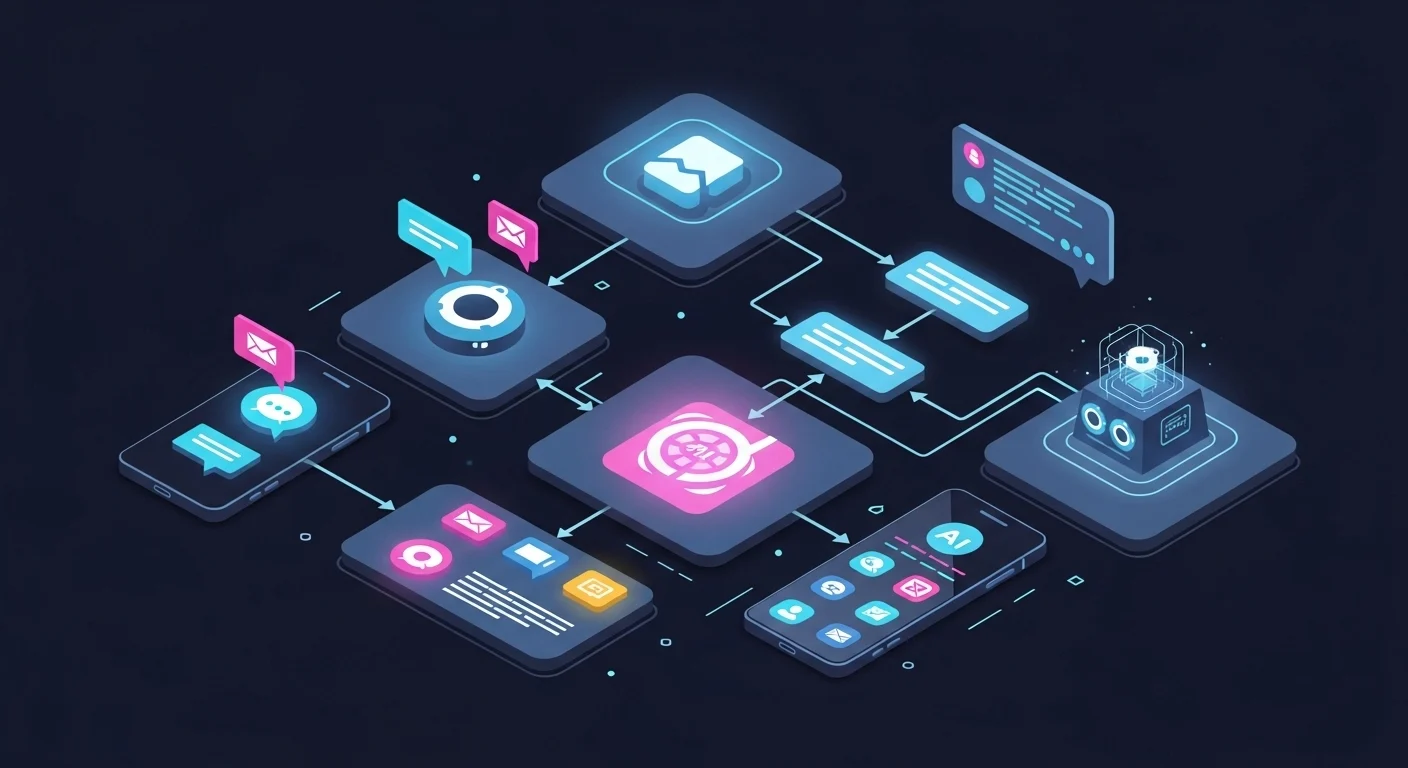
The digital marketing landscape has undergone a massive transformation over the past decade. Businesses have moved from traditional marketing channels such as television, radio, and print to digital platforms where audiences spend the majority of their time. Social media, messaging apps, and conversational interfaces have created new opportunities for brands to connect with their audiences in real time.
However, with these opportunities came a major challenge: scale.
As audiences grew and engagement increased, responding to every message, comment, and inquiry became nearly impossible for businesses operating manually. Customers began expecting instant responses, personalized interactions, and consistent communication across multiple channels.
This is where direct automation emerged as a powerful solution.
Direct automation refers to the use of automated systems to communicate with customers instantly and personally through direct messaging channels. One of the most influential platforms leading this revolution is ManyChat, a tool that allowed businesses to automate conversations in messaging platforms such as Facebook Messenger, Instagram Direct Messages, WhatsApp, and SMS.
ManyChat didn’t simply introduce automation; it democratized conversational marketing.
By making chatbot creation visual, intuitive, and accessible, it empowered marketers, entrepreneurs, creators, and small businesses to build sophisticated automation flows without coding knowledge.
In this article, we will explore:
- The evolution of messaging and conversational marketing
- The rise of direct automation
- How ManyChat transformed the industry
- The business advantages of automation
- Real-world use cases
- The future of conversational marketing
Let’s dive into the power of direct automation.
The Rise of Messaging Platforms 📱
To understand why direct automation became so powerful, we need to look at the rise of messaging apps.
Over the past decade, messaging apps have become the primary communication channel for billions of people worldwide.
People now spend more time in messaging apps than on traditional social networks.
Global Messaging Behavior
| Metric | Approximate Value |
|---|---|
| People using messaging apps | 3+ billion |
| Average daily messages sent | 100+ billion |
| Preferred brand communication channel | Messaging |
| Average email open rate | 15–25% |
| Messaging open rate | 80–95% |
This massive behavioral shift created an opportunity for businesses.
Instead of relying only on:
- Email marketing 📧
- Website forms 🌐
- Cold advertising 📢
Businesses could now communicate directly with customers through chat.
But there was a problem.
Customers expected instant replies.
No brand could realistically respond manually to thousands of daily messages.
Automation became necessary.
What Is Direct Automation? 🤖
Direct automation is the process of automatically responding to users through messaging channels using predefined logic, triggers, and conversational flows.
Rather than a human replying to each message, an automated system handles the conversation.
These systems can:
- Answer frequently asked questions
- Guide users through sales funnels
- Deliver digital products
- Book appointments
- Capture leads
- Provide customer support
Core Components of Direct Automation
| Component | Description |
|---|---|
| Triggers | Events that start a conversation |
| Automation flows | Predefined conversation paths |
| Conditions | Rules that guide user behavior |
| Tags | Labels that categorize users |
| Sequences | Scheduled message series |
| Integrations | Connections with external tools |
Automation does not necessarily replace humans.
Instead, it augments human capability by handling repetitive tasks while humans focus on complex interactions.
The Birth of Conversational Marketing 💬
Before direct automation tools existed, businesses relied heavily on email marketing.
Email was powerful, but it had limitations:
- Low open rates
- Spam filters
- Slow responses
- Inbox competition
Messaging platforms introduced a new paradigm:
Conversational marketing.
Conversational marketing focuses on real-time, dialogue-based communication between businesses and customers.
Instead of broadcasting messages, businesses engage in conversations.
Traditional Marketing vs Conversational Marketing
| Feature | Traditional Marketing | Conversational Marketing |
|---|---|---|
| Communication | One-way | Two-way |
| Speed | Delayed | Instant |
| Personalization | Limited | Highly personalized |
| Engagement | Low | High |
| User Experience | Passive | Interactive |
Conversational marketing felt human, even when powered by automation.
This is the environment where ManyChat emerged.
The Emergence of ManyChat 🚀
ManyChat was founded with a clear mission:
Make chat marketing accessible to everyone.
Before tools like ManyChat existed, building chatbots required:
- Programming skills
- Developer teams
- Complex APIs
- High costs
ManyChat changed everything by introducing a visual automation builder.
Users could create chatbot flows simply by dragging and connecting blocks.
Key Innovations Introduced by ManyChat
| Innovation | Impact |
|---|---|
| Visual flow builder | No coding required |
| Messenger marketing | Direct communication channel |
| Comment automation | Turn comments into conversations |
| Growth tools | Automated lead capture |
| Broadcast messaging | Mass communication in chat |
| Multi-channel messaging | Instagram, SMS, WhatsApp |
This made chatbot automation accessible not only to corporations but also to:
- Small businesses
- influencers
- digital creators
- course creators
- e-commerce stores
Direct automation was no longer a luxury.
It became a standard marketing strategy.
How ManyChat Changed the Game 🎯
ManyChat fundamentally changed the way businesses interact with customers.
Instead of static forms or delayed emails, businesses could create interactive messaging experiences.
Let’s explore the ways ManyChat transformed digital marketing.
1. Instant Engagement
Consumers expect instant answers.
Automation ensures responses happen within seconds.
Benefits
- Faster customer support
- Improved satisfaction
- Reduced bounce rates
- Higher engagement
| Response Type | Average Time |
|---|---|
| Manual response | Minutes or hours |
| Automated response | Seconds |
Speed alone dramatically improved conversion rates.
2. Lead Generation on Autopilot
ManyChat introduced powerful growth tools.
These tools allowed businesses to capture leads automatically through:
- comments
- keywords
- links
- QR codes
- landing pages
Example Flow
1️⃣ User comments on a post
2️⃣ Automation sends a direct message
3️⃣ User interacts with chatbot
4️⃣ Bot collects contact info
5️⃣ Lead enters marketing funnel
This created a self-operating lead generation system.
3. Higher Open Rates 📈
Messaging drastically outperformed email.
| Channel | Average Open Rate |
|---|---|
| 20% | |
| Push notifications | 40% |
| Messaging apps | 80–95% |
With these open rates, businesses experienced dramatic improvements in:
- campaign performance
- click-through rates
- engagement
4. Personalized Experiences
Automation doesn’t mean generic messages.
ManyChat allows personalization using:
- name
- location
- interests
- behavior
- purchase history
Example Personalized Message
“Hi Sarah 👋
I saw you were interested in our photography course.
Would you like to see the beginner or advanced training?”
This feels far more human than traditional marketing.
5. Automated Sales Funnels 💰
ManyChat made it possible to create full marketing funnels inside chat.
Typical Chat Funnel
| Stage | Automation Action |
|---|---|
| Awareness | Send welcome message |
| Interest | Deliver valuable content |
| Consideration | Provide product information |
| Decision | Offer promotion |
| Action | Send purchase link |
Automation can also trigger reminders, increasing sales conversions.
6. Comment-to-DM Automation
One of ManyChat’s most revolutionary features was comment automation.
This works like this:
1️⃣ User comments on a social media post
2️⃣ Automation detects the comment
3️⃣ Bot sends a DM automatically
Why This Is Powerful
Social media algorithms reward engagement.
Comment automation creates:
- more interactions
- higher reach
- viral potential
This feature alone transformed Instagram marketing.
7. 24/7 Customer Support
Automation works around the clock.
Businesses no longer need to hire large support teams to answer common questions.
Typical Automated Support Topics
- Pricing
- Shipping
- Business hours
- FAQs
- Booking
If needed, the conversation can be transferred to a human.
Business Impact of Direct Automation 💼
Direct automation produces measurable results.
Key Business Benefits
| Benefit | Result |
|---|---|
| Reduced workload | Teams save hours daily |
| Faster responses | Higher customer satisfaction |
| Automated sales | Increased revenue |
| Better data | Customer insights |
| Scalable communication | Handle thousands of users |
Automation allows businesses to scale without proportional increases in staff.
Use Cases Across Industries
ManyChat is used across many sectors.
E-Commerce 🛍️
Automation helps with:
- product recommendations
- order tracking
- abandoned cart reminders
Example Flow
Customer asks about product → bot shows catalog → customer purchases.
Content Creators 🎥
Creators use automation to:
- deliver exclusive content
- grow email lists
- promote courses
- distribute links
Coaches and Consultants
Automation can:
- qualify leads
- book discovery calls
- send reminders
Local Businesses
Restaurants, gyms, and salons use automation for:
- reservations
- promotions
- event announcements
Example Automation Funnel
| Step | Message |
|---|---|
| Welcome | Greeting message |
| Qualification | Ask user interest |
| Content Delivery | Send valuable resource |
| Offer | Present product |
| Follow-up | Reminder message |
This entire process can happen automatically.
Automation vs Human Interaction
Automation should enhance—not replace—human communication.
Ideal Strategy
| Automation | Human |
|---|---|
| FAQs | complex issues |
| lead capture | negotiation |
| scheduling | customer relationships |
| content delivery | support escalation |
Hybrid communication creates the best experience.
The Psychology Behind Chat Automation 🧠
Why do users respond so well to messaging automation?
Several psychological factors play a role.
1. Immediacy
Instant responses create satisfaction.
2. Personalization
Users feel acknowledged when addressed by name.
3. Interaction
Conversations feel more engaging than reading static pages.
4. Control
Users choose responses through buttons and quick replies.
This interactive design increases engagement.
Challenges of Automation
Despite its advantages, automation also presents challenges.
Common Issues
| Challenge | Description |
|---|---|
| Over-automation | Too many robotic responses |
| Poor flow design | Confusing conversations |
| Platform restrictions | Messaging rules |
| Lack of personalization | Generic messages |
Successful automation requires thoughtful design.
Best Practices for Direct Automation
Businesses using ManyChat should follow these principles.
1. Keep Conversations Natural
Avoid robotic language.
2. Offer Clear Options
Buttons and quick replies help users navigate.
3. Use Personalization
Leverage available user data.
4. Provide Human Support
Allow escalation to a real person.
5. Deliver Value First
Don’t immediately push sales.
The Future of Direct Automation 🔮
Direct automation is still evolving.
Several trends will shape its future.
AI-Powered Conversations
Artificial intelligence will allow bots to:
- understand natural language
- adapt responses
- learn from interactions
Voice Integration
Messaging automation may expand into voice assistants.
Omnichannel Communication
Future automation will unify:
- chat
- SMS
- social media
Deeper Personalization
Customer data will enable hyper-targeted messaging.
The Creator Economy and Automation
Creators are increasingly using tools like ManyChat.
Automation allows them to:
- manage thousands of followers
- distribute digital products
- build communities
This has made automation a core tool in the creator economy.
Automation and Small Business Empowerment
Before automation tools existed, small businesses struggled to compete with large companies.
Now they can:
- automate marketing
- handle large audiences
- operate globally
Direct automation levels the playing field.
Ethical Considerations
Automation should always respect user privacy and consent.
Important principles include:
- transparency
- opt-in communication
- respectful messaging frequency
Responsible automation builds long-term trust.
Final Thoughts
The rise of messaging platforms created a new communication landscape where immediacy, personalization, and engagement became essential.
Direct automation emerged as the solution that allowed businesses to meet these expectations at scale.
Among the platforms leading this transformation, ManyChat stands out for its accessibility, innovation, and powerful features.
By turning conversations into automated systems, ManyChat enabled businesses of all sizes to:
- capture leads
- nurture relationships
- automate marketing
- increase sales
- improve customer experience
The true power of direct automation lies not just in efficiency but in creating meaningful conversations at scale.
As technology evolves and artificial intelligence becomes more integrated with messaging platforms, conversational automation will only grow more powerful.
Businesses that embrace this shift will be better positioned to thrive in a world where conversation is the new interface.
The game has changed — and direct automation is leading the way. 🚀
Leave a Reply