
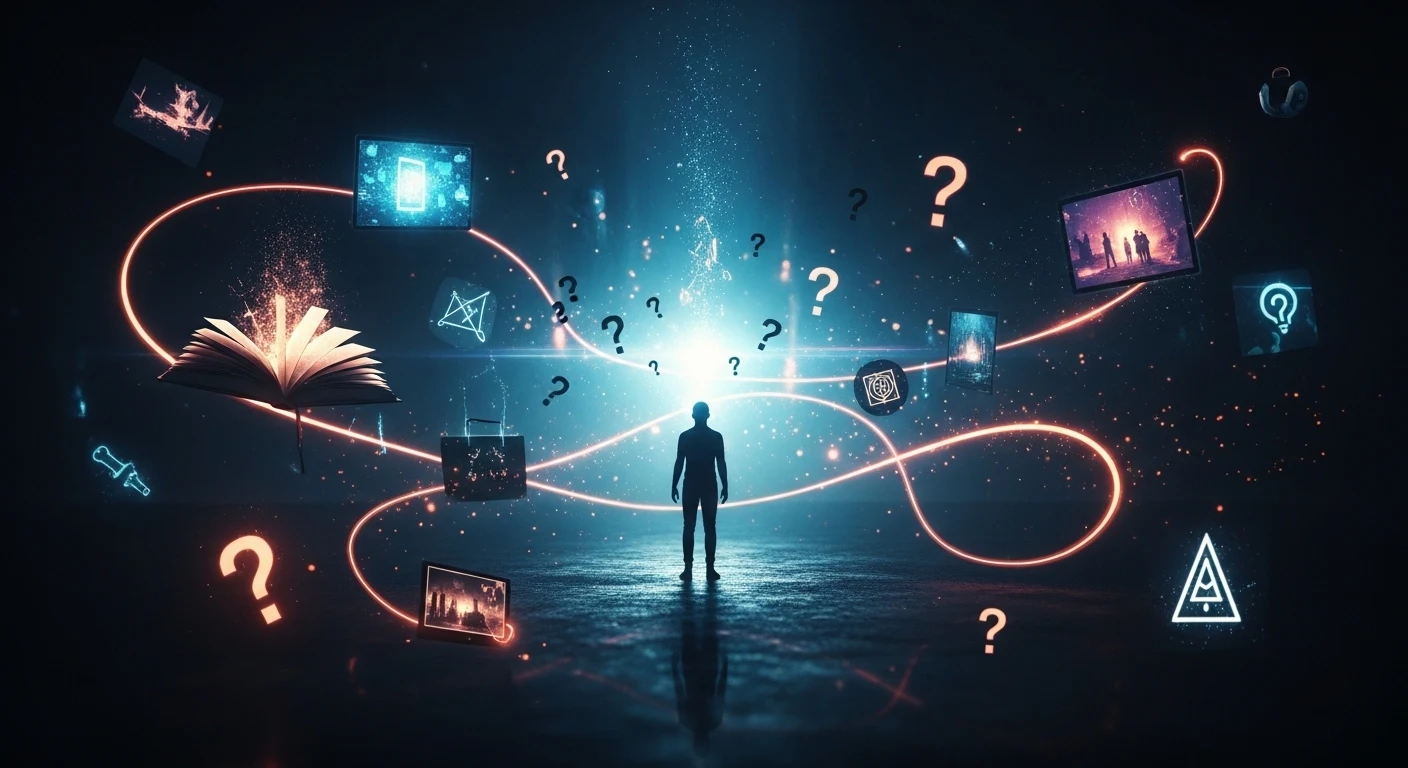
In a world saturated with content, launching a story—whether it’s a novel, a screenplay, a podcast, a video series, or even a brand narrative—is no longer just about releasing it into the world. It’s about preparing the audience’s mind before the story even begins.
Modern audiences are not passive consumers; they are active participants. They scroll, skim, compare, and decide within seconds whether something deserves their attention. This is where the “Anticipated Curiosity” technique becomes a powerful strategic tool.
Instead of simply telling a story, this approach primes curiosity in advance, creating a psychological tension that demands resolution. It transforms a launch from a single event into an unfolding experience—one that begins before the story is even available.
Think of it like lighting a fuse 🔥. By the time the story arrives, the audience is already emotionally and cognitively invested.
What Is “Anticipated Curiosity”? 🤔
Anticipated Curiosity is a storytelling and marketing technique that deliberately creates questions, gaps, and intrigue ahead of a story’s release, so the audience feels compelled to engage once it launches.
It operates on a simple but powerful principle:
People are more driven to resolve curiosity than to consume information.
Core Definition
Anticipated Curiosity = Pre-launch narrative tension designed to create unanswered questions that the story will resolve.
The Psychology Behind It 🧠
To understand why this technique works, we need to explore a few psychological mechanisms.
1. The Curiosity Gap
Humans are wired to notice gaps between what they know and what they want to know.
- When a gap is small → curiosity spikes
- When a gap is too large → confusion or disengagement
Anticipated Curiosity carefully calibrates this gap.
2. The Zeigarnik Effect
People remember unfinished or interrupted tasks better than completed ones.
When you introduce:
- A mystery 🔍
- A partial story
- An unresolved conflict
The brain keeps returning to it, seeking closure.
3. Dopamine and Anticipation
Anticipation itself releases dopamine—not just the reward.
That means:
- Waiting can be pleasurable 😌
- Teasing increases engagement
- Delayed gratification builds emotional investment
4. Narrative Transportation
When curiosity is triggered early, audiences begin constructing mental versions of the story before it even starts.
They are no longer spectators—they are co-creators.
Traditional Launch vs Anticipated Curiosity Launch 📊
| Aspect | Traditional Launch | Anticipated Curiosity Launch |
|---|---|---|
| Timing | Story released first | Curiosity created first |
| Audience role | Passive | Active, speculative |
| Engagement | Starts at launch | Starts before launch |
| Emotional investment | Low to moderate | High |
| Memory retention | Moderate | Strong |
| Virality potential | Limited | High 🚀 |
The Core Elements of Anticipated Curiosity 🧩
To execute this technique effectively, you need to master five key elements.
1. The Hook (The Spark) ⚡
This is the first signal that something intriguing exists.
Examples:
- A cryptic line
- A strange image
- A paradox
- A question with no immediate answer
👉 Example:
“She disappeared… but kept sending messages.”
This creates instant curiosity.
2. The Gap (The Unknown) 🌫️
The hook must create a clear but incomplete understanding.
Too much clarity = boring
Too little clarity = confusing
The sweet spot:
- The audience understands enough to care
- But not enough to feel satisfied
3. The Promise (Implicit or Explicit) 🎯
The audience must believe:
“If I stay, I’ll get answers.”
Without this promise, curiosity collapses into frustration.
4. The Escalation (Layering Mystery) 📈
Curiosity should grow over time.
Each new piece:
- Answers something small
- Raises something bigger
This creates a curiosity ladder.
5. The Payoff (Resolution) 💥
The story must eventually deliver.
If it doesn’t:
- Trust is broken
- Future curiosity attempts fail
The Anticipated Curiosity Framework 🏗️
Here’s a structured model you can use:
Phase 1: Seeding 🌱
Introduce intrigue without explanation.
Goal: Trigger awareness
Examples:
- A mysterious quote
- A symbol
- A short teaser
Phase 2: Provoking 🤯
Add complexity and deepen the mystery.
Goal: Build speculation
Examples:
- Conflicting clues
- Fragmented story pieces
- Character hints
Phase 3: Expanding 🌌
Give slightly more context—but not full clarity.
Goal: Strengthen emotional investment
Phase 4: Converging 🔗
All clues start pointing toward something meaningful.
Goal: Prepare for launch
Phase 5: Revealing 🎬
The story is finally released.
Goal: Deliver payoff and satisfaction
Example Breakdown 🧪
Let’s imagine a fictional story launch.
Story Concept:
A sci-fi thriller about a city where time stops for one hour every day.
Execution Using Anticipated Curiosity
Week 1 – Seeding
Post:
“Every day at 3:17 PM… everyone freezes.”
No explanation.
Week 2 – Provoking
Post:
- A video of a crowded street suddenly still
- Caption: “Except one person.”
Week 3 – Expanding
Post:
- A character journal entry
- “I don’t know why I can move when no one else can.”
Week 4 – Converging
Post:
- Countdown begins ⏳
- More clues connect
Launch Day – Revealing
Full story drops.
Content Types That Work Best 🎨
Different formats amplify curiosity differently.
| Format | Strength |
|---|---|
| Short text | Fast intrigue |
| Video teasers | Emotional immersion |
| Audio clips | Atmosphere 🎧 |
| Social media threads | Layered mystery |
| Emails | Controlled narrative delivery |
| Interactive content | Deep engagement |
Platforms and Strategy 📱
Social Media
- Ideal for rapid curiosity bursts
- Use short, cryptic posts
- Encourage speculation in comments
Email Campaigns 📧
- Deliver serialized mystery
- Build deeper narrative connection
Landing Pages 🌐
- Central hub of intrigue
- Can host clues, visuals, countdowns
Emotional Design of Curiosity ❤️
Curiosity is not just cognitive—it’s emotional.
Emotional States You Can Trigger:
- Wonder ✨
- Suspense 😬
- Fear 😱
- Excitement 🎉
- Confusion (controlled) 😵
Common Mistakes ⚠️
1. Being Too Vague
If people don’t understand anything, they won’t care.
2. Revealing Too Much Too Soon
Kills curiosity instantly.
3. No Payoff
The biggest mistake.
4. Inconsistent Messaging
Breaks immersion.
5. Overcomplication
Curiosity should intrigue—not exhaust.
Advanced Techniques 🔬
1. Reverse Curiosity
Start with the outcome:
“This is how the world ended.”
Then build backward.
2. Multi-Thread Curiosity
Multiple mysteries running in parallel.
3. Character-Based Curiosity
Let characters ask the questions instead of the narrator.
4. Interactive Curiosity
Let the audience uncover clues.
Measuring Success 📊
You can track:
| Metric | What It Indicates |
|---|---|
| Engagement rate | Curiosity strength |
| Comments/questions | Depth of intrigue |
| Shares | Viral curiosity |
| Watch time | Sustained interest |
| Conversion rate | Effective payoff |
Real-World Applications 🌍
This technique is not limited to fiction.
It can be used in:
- Product launches
- Personal branding
- Course releases
- YouTube series
- Podcasts
Why It Works in the Modern Era 🌐
Attention is scarce.
Curiosity:
- Cuts through noise
- Creates emotional hooks
- Builds anticipation
In short:
Information informs.
Curiosity compels.
Final Thoughts 💡
The “Anticipated Curiosity” technique transforms storytelling into an experience that begins before the story itself.
It leverages:
- Psychology
- Emotion
- Narrative structure
When done right:
- Your audience arrives already invested
- Your story lands harder
- Your impact multiplies
Leave a Reply