
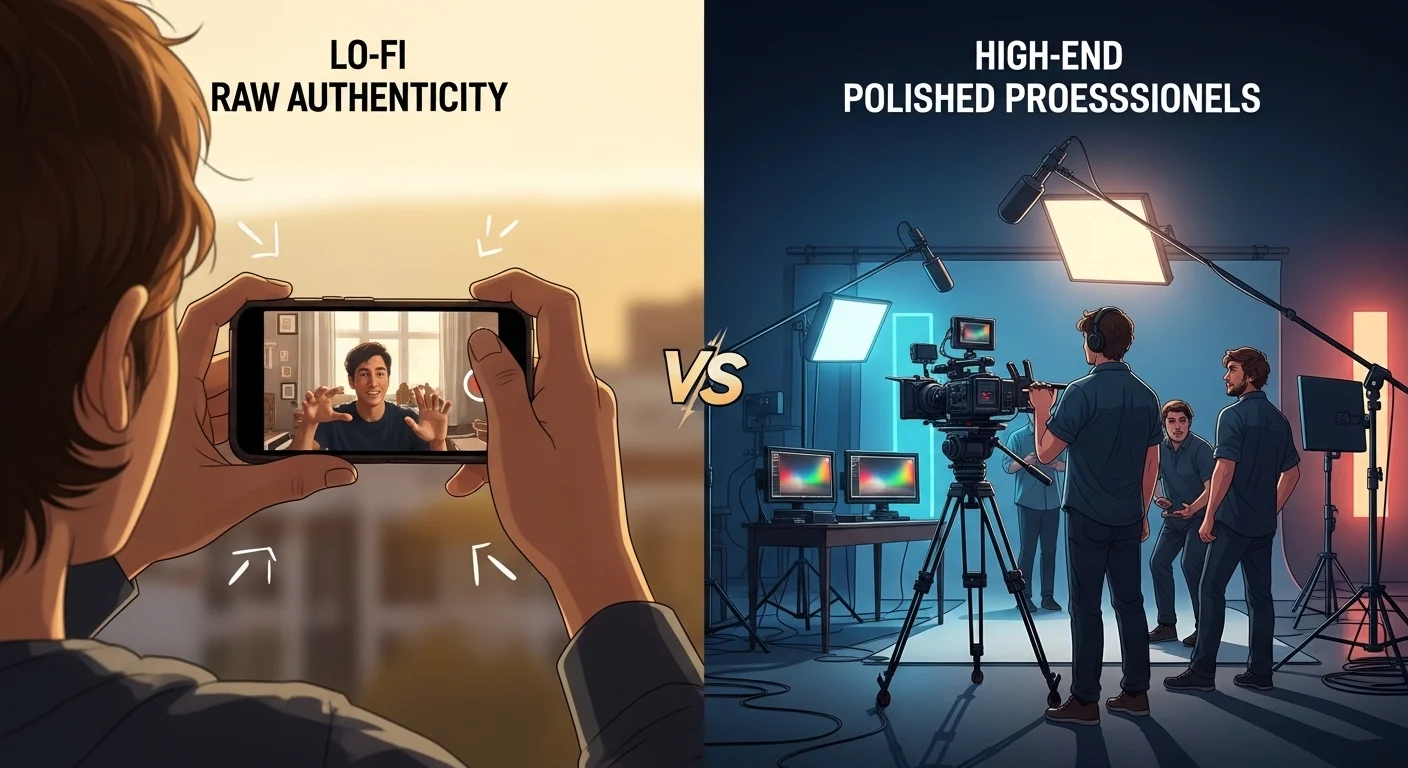
In the last decade, the visual language of digital media has undergone a profound transformation. Once dominated by ultra-polished, high-budget productions featuring cinematic color grading, pristine audio, and meticulously composed shots, today’s content ecosystem increasingly celebrates something different: imperfection.
The rise of the so-called “lo-fi” editing style—characterized by raw cuts, visible mistakes, natural lighting, handheld camera movement, minimal color correction, and even deliberately low resolution—raises a compelling question:
Is lo-fi editing beating high-end productions?
This is not merely a stylistic debate. It is a cultural, economic, technological, and psychological shift that reflects how audiences consume content, how creators produce it, and how platforms distribute it.
In this in-depth article, we’ll explore:
- What defines lo-fi vs. high-end editing
- Why audiences increasingly prefer authenticity
- The role of social platforms in shaping editing norms
- Economic realities of content production
- Psychological drivers behind visual preferences
- Data comparisons and trend tables
- When high-end still wins
- The future of hybrid aesthetics
Let’s dive into the evolving world of digital storytelling. 🎥
1. What Is “Lo-Fi” Editing?
“Lo-fi” (low fidelity) traditionally refers to audio recordings with audible imperfections. In video editing, the term has evolved to describe a style that embraces:
- Minimal or no color grading
- Handheld camera movement
- Natural lighting
- Jump cuts
- On-screen text overlays
- Visible mistakes or bloopers
- Vertical framing (often smartphone-native)
- Casual tone and direct address
Lo-fi editing is often fast, immediate, and emotionally transparent.
Common Characteristics of Lo-Fi Editing
| Feature | Description | Emotional Effect |
|---|---|---|
| Handheld Camera | Shaky, natural movement | Authenticity, intimacy |
| Jump Cuts | Rapid cuts between phrases | Energy, honesty |
| Natural Light | No studio lighting | Realness |
| Raw Audio | No heavy noise reduction | Presence |
| Minimal Effects | Few transitions or overlays | Directness |
| Smartphone Filming | Non-cinematic framing | Accessibility |
Lo-fi is not necessarily low quality—it is intentionally unpolished.
2. What Defines High-End Production?
High-end productions are characterized by:
- Cinematic lighting setups
- Professional camera rigs
- Advanced color grading
- Sound design and music scoring
- Motion graphics
- Scripted performances
- Controlled environments
This style emphasizes polish, visual harmony, and narrative control.
Core Elements of High-End Editing
| Feature | Description | Emotional Effect |
|---|---|---|
| Controlled Lighting | Three-point or cinematic lighting | Authority |
| Stabilized Footage | Gimbals, tripods | Professionalism |
| Advanced Color Grading | LUTs, film emulation | Mood control |
| Sound Design | Layered audio | Immersion |
| Graphics & Animation | Motion design | Production value |
| Scripted Dialogue | Refined messaging | Clarity |
High-end production signals investment, expertise, and credibility. 💼
3. Why Lo-Fi Is Rising 🚀
3.1 Platform Algorithms Favor Authenticity
Social media platforms prioritize engagement. And engagement often correlates with relatability.
Lo-fi videos:
- Feel spontaneous
- Encourage comments
- Appear less “advertisement-like”
- Blend into user-generated feeds
When content looks too polished, audiences sometimes perceive it as corporate or manipulative.
Engagement Comparison (Typical Social Media Trends)
| Metric | Lo-Fi Content | High-End Content |
|---|---|---|
| Average Watch Time | Moderate to High | High (if strong hook) |
| Comment Rate | High | Moderate |
| Share Rate | High | Moderate |
| Trust Perception | High | Varies |
| Ad-Like Perception | Low | High |
Lo-fi often wins in relatability.
3.2 The Psychology of Imperfection 🧠
Humans are wired to connect with imperfection.
Research in psychology shows:
- Flaws increase relatability
- Over-perfection can trigger distrust
- Authentic expression builds parasocial bonds
When viewers see:
- Slight stumbles in speech
- Natural facial expressions
- Unfiltered environments
They feel they are seeing something real.
High-end editing can sometimes create emotional distance.
3.3 Speed of Production ⏱️
Lo-fi editing is fast.
Creators can:
- Film on a phone
- Edit within minutes
- Publish instantly
High-end production requires:
- Planning
- Shooting schedules
- Equipment
- Post-production workflows
In a fast-paced content ecosystem, speed is power.
4. Economic Factors 💰
4.1 Lower Barrier to Entry
Lo-fi democratizes content creation.
| Factor | Lo-Fi | High-End |
|---|---|---|
| Equipment Cost | Low | High |
| Editing Time | Short | Long |
| Crew Required | None or 1 person | Multiple |
| Learning Curve | Low | Steep |
| Scalability | High | Limited |
Because of this, independent creators thrive in lo-fi formats.
4.2 ROI Considerations
For brands and businesses:
High-end production:
- High upfront cost
- Long lifespan
- Suitable for campaigns
Lo-fi production:
- Low cost
- High volume
- Quick testing
Brands now test messages using lo-fi before investing in polished versions.
5. Audience Behavior Has Changed 📱
5.1 Mobile-First Viewing
Most content is consumed on phones.
Small screens reduce the visual impact of:
- Complex lighting
- Subtle color grading
- Cinematic depth
But they amplify:
- Facial expressions
- Direct eye contact
- Raw energy
Lo-fi thrives in vertical formats.
5.2 Short Attention Spans
Modern audiences scroll rapidly.
Lo-fi editing:
- Gets to the point
- Uses jump cuts
- Maintains momentum
High-end storytelling often requires patience.
6. Trust and Marketing 🛍️
Consumers increasingly distrust polished advertisements.
Lo-fi content:
- Feels like peer recommendation
- Mimics user-generated content
- Builds community
High-end content:
- Feels branded
- Signals authority
- Works for luxury positioning
Trust now often comes from perceived transparency rather than technical excellence.
7. When High-End Still Dominates 🏆
Lo-fi isn’t replacing high-end universally.
High-end production excels in:
- Film and television
- Luxury brand campaigns
- Corporate communications
- Documentary storytelling
- Event productions
- Music videos
Certain contexts demand polish.
7.1 Perception of Value
High production quality can signal:
- Investment
- Expertise
- Professionalism
For industries like:
- Finance
- Healthcare
- Technology
- High fashion
Lo-fi may undermine credibility.
8. Emotional Tone Differences 🎭
| Aspect | Lo-Fi | High-End |
|---|---|---|
| Feels Like | Conversation | Presentation |
| Energy | Spontaneous | Composed |
| Authority | Relatable | Professional |
| Vulnerability | High | Controlled |
| Visual Impact | Simple | Cinematic |
Neither is inherently superior—each communicates differently.
9. The Creator Economy Influence 🌍
The explosion of independent creators reshaped editing norms.
Creators:
- Film daily
- Edit quickly
- Publish frequently
Consistency often beats perfection.
High-end production struggles to match daily volume.
10. The Hybrid Model 🔄
Many creators combine both worlds.
Example strategies:
- Lo-fi hooks
- High-end core segments
- Casual intros + cinematic B-roll
- Raw dialogue + professional sound design
Hybrid editing balances authenticity and quality.
11. Emotional Authenticity vs Visual Authority
This debate is ultimately about two competing values:
Authenticity
vs
Authority
Lo-fi prioritizes authenticity.
High-end prioritizes authority.
Modern audiences often value authenticity more.
But authority remains essential in certain sectors.
12. Algorithmic Incentives 📊
Platforms reward:
- Engagement
- Retention
- Watch completion
- Comments
Lo-fi often sparks discussion because it feels conversational.
High-end often impresses but may not provoke interaction.
13. Generational Differences 👥
| Generation | Editing Preference |
|---|---|
| Gen Z | Strongly favors lo-fi |
| Millennials | Balanced |
| Gen X | Lean toward polished |
| Boomers | Prefer traditional production |
Younger audiences grew up with smartphones—not television studios.
Their visual literacy differs.
14. Emotional Safety and Vulnerability ❤️
Lo-fi creators often:
- Share struggles
- Speak directly
- Avoid heavy scripting
This creates intimacy.
High-end production sometimes feels guarded.
15. Is Lo-Fi Just a Trend? ⏳
Some argue lo-fi is cyclical.
History shows:
- Punk rock challenged polished music
- Indie film challenged Hollywood
- Reality TV challenged scripted shows
Lo-fi may represent a cultural correction rather than permanent dominance.
16. Risks of Lo-Fi ⚠️
Lo-fi editing carries risks:
- Perceived lack of professionalism
- Lower production clarity
- Poor audio quality
- Inconsistent branding
Not all “raw” content is effective.
Intentional lo-fi differs from careless production.
17. The Illusion of Authenticity 🎭
Ironically, some lo-fi content is carefully engineered to appear spontaneous.
Brands now:
- Script “natural” dialogue
- Simulate handheld footage
- Add artificial grain
Authenticity can be manufactured.
This blurs the line between lo-fi and high-end.
18. The Role of AI in Editing 🤖
AI tools are accelerating editing workflows.
Now creators can:
- Auto-caption instantly
- Remove background noise
- Apply color presets quickly
- Cut silences automatically
This reduces the gap between lo-fi and polished production.
High-end editing is becoming more accessible.
19. Comparative Overview
Lo-Fi vs High-End Summary Table
| Category | Lo-Fi | High-End |
|---|---|---|
| Cost | Low | High |
| Speed | Fast | Slow |
| Emotional Impact | Relatable | Impressive |
| Trust | Often High | Depends on context |
| Scalability | High | Limited |
| Longevity | Short-term | Long-term |
| Brand Fit | Personal brands | Established brands |
| Risk | Amateur perception | Corporate distance |
20. Case-Based Evaluation Framework 🧩
To decide which style works best, consider:
- Audience expectations
- Platform type
- Budget
- Message tone
- Longevity goals
Decision Matrix
| Scenario | Recommended Style |
|---|---|
| Personal vlog | Lo-Fi |
| Product launch | Hybrid |
| Luxury brand commercial | High-End |
| Daily educational tips | Lo-Fi |
| Documentary film | High-End |
| Social ads testing | Lo-Fi |
| Corporate annual video | High-End |
21. The Cultural Mood
We live in a time of:
- Information overload
- Institutional distrust
- Desire for connection
- Short attention spans
Lo-fi aligns with cultural fatigue toward over-production.
It feels human.
22. The Attention Economy 🧲
In crowded feeds, authenticity cuts through.
Perfect visuals can feel like ads.
Raw visuals feel like people.
And people engage with people.
23. The Future: Convergence 🌅
The future likely isn’t a winner-takes-all scenario.
Instead, we’ll see:
- Intentional imperfection
- Selective polish
- Context-driven editing
- Creator-brand collaborations
High-end productions may adopt lo-fi aesthetics.
Lo-fi creators may integrate subtle polish.
24. Final Verdict: Is Lo-Fi Beating High-End?
In social media engagement? Often yes.
In cinematic storytelling? No.
In trust building? Frequently.
In brand authority? Not always.
Lo-fi is winning in:
- Speed
- Volume
- Relatability
- Community building
High-end is winning in:
- Prestige
- Long-form narrative
- Controlled messaging
- Visual spectacle
The question is not which is superior.
The real question is:
What does your audience need to feel?
Because editing is emotional engineering.
25. Conclusion 🎬
The rise of lo-fi editing signals more than a stylistic trend—it reflects a deeper cultural shift toward authenticity, immediacy, and emotional connection.
High-end productions are not disappearing.
They are evolving.
Lo-fi is not replacing polish.
It is redefining value.
In a world saturated with content, perfection no longer guarantees attention.
Humanity does.
The future of editing belongs not to the most expensive production, nor to the most casual recording—but to creators who understand when to be polished, and when to be real. ✨
Leave a Reply