
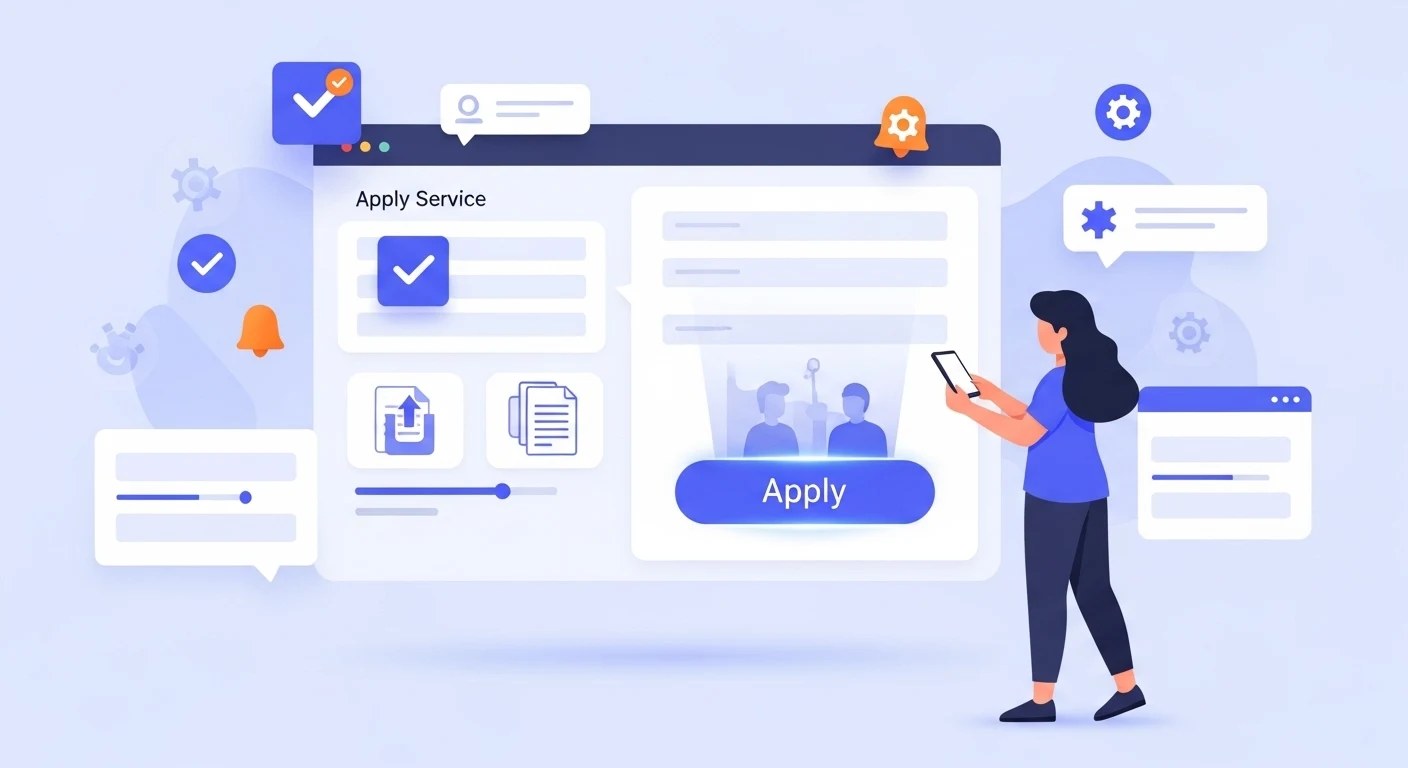
In today’s digital world, most services—from job applications to financial tools, government portals, freelance marketplaces, and subscription platforms—are accessed through online interfaces. One of the most common interface elements you will encounter is the “Apply” button. While it may appear simple, the Apply button is part of a broader ecosystem of interactive tools that allow users to submit requests, register for services, enroll in programs, and interact with digital platforms.
Understanding how the Apply button works—and how it connects with other interface tools—can dramatically improve your ability to navigate service platforms efficiently and avoid common mistakes.
This comprehensive guide explores:
- What the Apply button actually does
- When and where it appears
- How to properly use it
- Supporting tools that work with it
- Best practices for successful service applications
- Common errors and how to avoid them
- Advanced features in modern service platforms
By the end of this article, you will understand how to confidently use service application tools across a wide range of digital systems.
1. Understanding the “Apply” Button 🔘
The Apply button is a user interface element designed to submit a request or application for a service, program, or opportunity.
It is commonly used in:
- Job platforms
- Government portals
- University applications
- Loan services
- Grant submissions
- Freelance marketplaces
- Software configuration settings
When a user clicks Apply, they are typically initiating one of the following actions:
- Submitting personal information
- Requesting access
- Registering for a program
- Sending an application
- Confirming eligibility
- Applying changes to a system
Basic Function
The Apply button typically performs these actions:
- Validates entered information
- Saves form data
- Submits the request to the system
- Displays confirmation or next steps
Example Workflow
| Step | Action | Result |
|---|---|---|
| 1 | User fills out form | Information collected |
| 2 | User clicks Apply | System checks data |
| 3 | System validates | Errors flagged if needed |
| 4 | Application submitted | Confirmation displayed |
2. Where You Will Find the Apply Button 📍
The Apply button is used across many digital services.
Common Platforms
| Platform Type | Purpose of Apply Button |
|---|---|
| Job portals | Apply for jobs |
| Loan platforms | Apply for financing |
| Government portals | Apply for benefits |
| Universities | Apply for admission |
| SaaS tools | Apply configuration settings |
| Freelance marketplaces | Apply to projects |
| Grants and funding | Apply for funding |
Example: Job Application
Typical steps:
- Create an account
- Upload résumé
- Fill personal data
- Click Apply
After clicking Apply, the platform sends your information to the employer.
3. The Apply Button in Software Settings ⚙️
In many applications, the Apply button does not submit a form, but instead activates changes to system settings.
Example:
- Changing language
- Updating display preferences
- Modifying security settings
Difference Between Apply and Save
| Button | Function |
|---|---|
| Apply | Applies changes immediately but keeps window open |
| Save | Applies changes and closes form |
| Cancel | Discards changes |
Example Settings Panel
| Action | Result |
|---|---|
| Change theme | Dark mode selected |
| Click Apply | Theme changes instantly |
| Click Save | Changes stored permanently |
4. The Application Process 📝
Using the Apply button is rarely a single step. It usually follows a structured application process.
Typical Process
1️⃣ Registration
2️⃣ Profile completion
3️⃣ Document upload
4️⃣ Form completion
5️⃣ Review information
6️⃣ Click Apply
7️⃣ Receive confirmation
Example Application Flow
| Stage | Description |
|---|---|
| Profile creation | User identity established |
| Data entry | Personal and professional info |
| Eligibility check | System verifies criteria |
| Application submission | Apply button used |
| Review phase | Organization evaluates |
5. Supporting Tools Around the Apply Button 🧰
The Apply button is usually accompanied by additional tools that guide users.
Key Tools
1️⃣ Upload Tool 📎
Used to attach files such as:
- CV
- Documents
- Certificates
- Identification
2️⃣ Form Fields 📋
Fields collect structured data.
Examples:
| Field | Purpose |
|---|---|
| Name | Identity |
| Contact | |
| Experience | Qualifications |
| Address | Location |
3️⃣ Validation Messages ⚠️
Before allowing submission, systems verify:
- Required fields
- Correct email format
- Valid document types
Example message:
“Please complete all required fields before applying.”
4️⃣ Progress Bars 📊
These help users track completion progress.
Example:
| Progress | Stage |
|---|---|
| 25% | Personal info |
| 50% | Documents |
| 75% | Review |
| 100% | Apply |
6. Advanced Application Tools 🧠
Modern platforms provide sophisticated tools to improve the application process.
1. Auto-Fill Systems
These automatically fill forms using stored data.
Benefits:
- Saves time
- Reduces errors
- Improves consistency
2. Resume Parsing
Some platforms analyze uploaded résumés and extract:
- Skills
- Work experience
- Education
| Feature | Benefit |
|---|---|
| Skill detection | Faster applications |
| Experience parsing | Accurate profiles |
3. AI Matching Tools 🤖
Certain platforms analyze profiles to match users with opportunities.
Example:
- Job recommendation systems
- Scholarship eligibility
- Service matching
7. Best Practices for Using the Apply Button ✔️
Submitting applications successfully requires careful preparation.
Recommended Steps
1️⃣ Read the requirements carefully
2️⃣ Prepare documents in advance
3️⃣ Double-check information
4️⃣ Use correct file formats
5️⃣ Review before clicking Apply
Application Checklist
| Task | Status |
|---|---|
| Profile complete | ✔ |
| Documents uploaded | ✔ |
| Contact info verified | ✔ |
| Requirements reviewed | ✔ |
8. Common Mistakes to Avoid ❌
Many users make errors when submitting applications.
Frequent Problems
| Mistake | Consequence |
|---|---|
| Missing documents | Application rejected |
| Incorrect email | No response received |
| Incomplete form | Submission blocked |
| Wrong file format | Upload failure |
Example Error Message
“Application cannot be submitted due to incomplete information.”
9. Security Considerations 🔐
Applications often involve sensitive information.
Users should follow security practices.
Security Tips
- Use secure connections (HTTPS)
- Avoid public Wi-Fi for applications
- Protect login credentials
- Verify official websites
Data Protection Elements
| Feature | Purpose |
|---|---|
| Encryption | Protects data |
| Secure login | Prevents unauthorized access |
| Identity verification | Confirms user identity |
10. Mobile vs Desktop Applications 📱💻
Modern services allow applications on multiple devices.
Comparison
| Feature | Mobile | Desktop |
|---|---|---|
| Convenience | High | Medium |
| Form visibility | Limited | Full |
| Document upload | Harder | Easier |
| Typing speed | Slower | Faster |
Recommendation
Use desktop devices for complex applications involving many documents.
11. Status Tracking Tools 📡
After clicking Apply, platforms usually provide status tracking features.
Example Status Types
| Status | Meaning |
|---|---|
| Submitted | Application received |
| Under review | Being evaluated |
| Approved | Accepted |
| Rejected | Not selected |
Notifications
Users may receive:
📧 Email updates
📱 Mobile alerts
🔔 Platform notifications
12. Canceling or Editing Applications ✏️
Some platforms allow users to modify applications after submission.
Options may include:
- Withdraw application
- Edit profile
- Upload additional documents
- Update information
Example Actions
| Action | Result |
|---|---|
| Withdraw | Application removed |
| Edit | Updated data submitted |
| Resubmit | Corrected application |
13. The Role of User Interface Design 🎨
Good interface design makes application processes easier.
Key design elements include:
- Clear buttons
- Logical form layout
- Helpful instructions
- Error prevention
Good UI Example
| Feature | Benefit |
|---|---|
| Large Apply button | Easy to find |
| Step indicators | Clear progress |
| Auto-save | Prevents data loss |
14. Accessibility Considerations ♿
Service platforms must also support accessibility.
Features include:
- Screen reader compatibility
- High contrast modes
- Keyboard navigation
- Simplified forms
These improvements help ensure that all users can access digital services.
15. The Future of Service Applications 🚀
Digital application systems continue evolving.
Emerging Technologies
| Technology | Impact |
|---|---|
| Artificial Intelligence | Faster screening |
| Blockchain verification | Secure credentials |
| Voice interfaces | Hands-free applications |
| Digital identity systems | Simplified verification |
Example Future Workflow
1️⃣ User logs in with digital identity
2️⃣ Platform auto-fills profile
3️⃣ AI evaluates eligibility
4️⃣ User clicks Apply
5️⃣ Instant feedback provided
Conclusion 🧩
The Apply button may seem like a simple interface element, but it plays a crucial role in the modern digital service ecosystem. Whether submitting a job application, requesting government benefits, enrolling in a program, or updating system settings, the Apply button acts as the gateway between user input and system action.
Understanding how to properly use the Apply button—and the tools that support it—can help users:
- Submit accurate applications
- Avoid common errors
- Save time
- Improve success rates
As digital services continue expanding, the ability to navigate application systems effectively will become an increasingly valuable skill.
By mastering the processes described in this guide—form completion, document management, validation checks, and status tracking—you can confidently interact with service platforms across industries and ensure that your applications are submitted efficiently and correctly.
Leave a Reply