
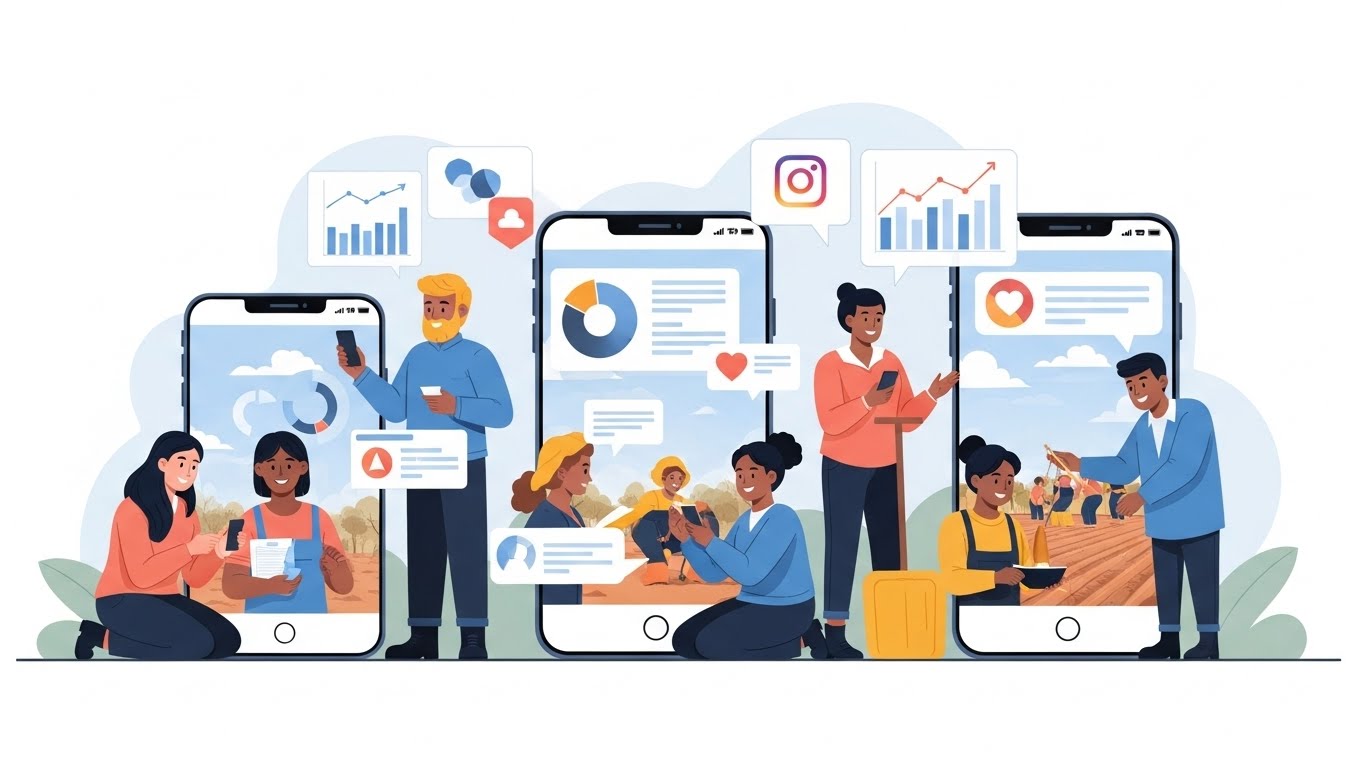
Nonprofit organizations operate in a world where trust, transparency, and storytelling are inseparable. Donors, volunteers, partners, and beneficiaries increasingly expect to see impact, not just read about it. In this environment, Instagram has evolved from a photo-sharing app into a powerful platform for narrative building, community engagement, and real-time accountability.
Impact reporting—traditionally delivered through annual reports, PDFs, or static web pages—can feel distant, slow, and inaccessible. Instagram, on the other hand, offers immediacy, emotion, and reach. When used strategically, it allows nonprofits to demonstrate outcomes, humanize data, and build long-term relationships with supporters.
This article explores Instagram for Nonprofits: Impact Reporting Strategies in depth. It is designed as a practical and conceptual guide for nonprofit leaders, communications professionals, social media managers, and fundraisers who want to transform their Instagram presence into a credible, compelling impact reporting channel.
You will learn:
- What impact reporting really means in a social media context
- Why Instagram is uniquely suited for nonprofit impact storytelling
- How to translate data into visuals and narratives
- Which content formats work best for impact reporting
- How to measure success beyond likes and followers
- Ethical considerations and common mistakes to avoid
Throughout the article, you will find frameworks, examples, tables, and actionable insights—all grounded in nonprofit realities. 🚀
1. Understanding Impact Reporting in the Nonprofit Sector 🧠
1.1 What Is Impact Reporting?
Impact reporting is the process of measuring, communicating, and learning from the outcomes of an organization’s activities. Unlike output reporting (e.g., “we distributed 10,000 meals”), impact reporting focuses on change (e.g., “food insecurity decreased by 20% in the target community”).
Key components of impact reporting include:
- Inputs: Resources invested (funds, staff time, volunteers)
- Activities: What the organization does (programs, services)
- Outputs: Direct results (number of people served)
- Outcomes: Short- and medium-term changes
- Impact: Long-term, sustained change
Instagram does not replace formal impact evaluation, but it can act as a translation layer, making complex results understandable and emotionally resonant.
1.2 The Shift from Static Reports to Dynamic Storytelling
Traditional impact reports are often:
- Published once a year
- Data-heavy and text-focused
- Consumed by a limited audience
Instagram, by contrast, enables:
- Continuous reporting throughout the year
- Bite-sized, visual-first communication
- Two-way dialogue with stakeholders
This shift does not mean abandoning rigor. It means reframing rigor through accessibility.
2. Why Instagram Is a Powerful Impact Reporting Platform 📱✨
2.1 Visual-First Communication
Impact is emotional. Visuals—photos, videos, graphics—activate empathy faster than text alone. Instagram’s design prioritizes visuals, making it ideal for:
- Showing beneficiaries (with consent)
- Demonstrating program activities
- Visualizing before-and-after scenarios
- Presenting data through infographics
2.2 Multiple Content Formats for Different Depths of Impact
Instagram offers several formats, each serving a distinct reporting function:
| Format | Best Use for Impact Reporting | Strength |
|---|---|---|
| Feed Posts | Key outcomes, milestones | Longevity |
| Stories | Real-time updates, quick wins | Immediacy |
| Reels | Emotional storytelling, reach | Discoverability |
| Carousels | Data breakdowns, narratives | Education |
| Lives | Transparency, Q&A | Trust-building |
Using these formats together allows nonprofits to report impact at different levels of depth and frequency.
2.3 Algorithmic Reach Meets Mission-Driven Content
Instagram’s algorithm rewards:
- Engagement (comments, shares, saves)
- Consistency
- Authentic storytelling
Impact-driven content naturally invites reflection and conversation, making it well-suited to organic reach when executed thoughtfully.
3. Defining Clear Impact Goals for Instagram 🎯
Before posting a single impact-related image, nonprofits must define why they are reporting impact on Instagram.
3.1 Common Impact Reporting Goals
- Build donor trust and retention
- Demonstrate accountability to funders
- Educate the public about social issues
- Motivate volunteers and advocates
- Influence policy or public opinion
Each goal influences tone, format, and metrics.
3.2 Aligning Instagram Goals with Organizational Strategy
Instagram impact reporting should not exist in isolation. It must align with:
- Theory of Change
- Strategic plan
- Monitoring and evaluation frameworks
When alignment exists, Instagram becomes a strategic amplifier, not just a marketing tool.
4. Turning Data into Stories That Resonate 📊➡️📖
4.1 The Challenge of Data Fatigue
Numbers alone rarely inspire action. On Instagram, dense statistics without context often lead to disengagement.
The solution is not to remove data—but to embed it within human stories.
4.2 The Data-to-Story Framework
A simple framework for impact posts:
- Context – What problem are we addressing?
- Action – What did we do?
- Result – What changed?
- Human Face – Who experienced this change?
- Meaning – Why does this matter?
Example:
- “Access to clean water is still a challenge in rural areas 🚱 (context).
- This year, our teams built 12 new wells (action).
- As a result, 3,500 people now have reliable access to clean water (result).
- Meet Amina, a mother of three, who no longer walks 10 km daily for water (human face).
- Clean water means health, education, and dignity 💙 (meaning).”
4.3 Visualizing Impact Data
Effective data visualization on Instagram includes:
- Simple charts (icons, bars, progress circles)
- Clear labels
- High contrast and readability
- Minimal text
Avoid clutter. One post = one key message.
5. Content Formats for Impact Reporting on Instagram 🧩
5.1 Feed Posts: The Backbone of Your Impact Narrative
Feed posts act as your organization’s public archive. Best practices include:
- High-quality visuals
- Strong captions with storytelling
- Clear calls to reflection or action
5.2 Carousels: Educating Through Progression ➡️
Carousels are ideal for impact reporting because they allow narrative flow:
Slide ideas:
- Problem statement
- Program intervention
- Key data point
- Human story
- Outcome or takeaway
5.3 Stories: Real-Time Accountability ⏱️
Stories are perfect for:
- Daily program updates
- Field visits
- Quick data snapshots
- Polls and questions
Using story highlights, nonprofits can organize impact themes (e.g., “2024 Impact,” “Education,” “Health”).
5.4 Reels: Emotion, Movement, and Reach 🎥
Reels humanize impact through:
- Short testimonials
- Day-in-the-life clips
- Before-and-after transformations
Music, captions, and pacing are essential for accessibility and emotional connection.
6. Ethical and Responsible Impact Reporting ⚖️
6.1 Consent and Dignity
Nonprofits must prioritize:
- Informed consent
- Respectful representation
- Avoiding stereotypes or exploitation
Impact reporting should empower, not objectify.
6.2 Avoiding “Poverty Porn”
Sensationalizing suffering may drive short-term engagement but erodes trust and dignity. Ethical impact reporting focuses on:
- Strengths and resilience
- Partnership, not saviorism
- Context and complexity
6.3 Accuracy and Honesty
Never exaggerate impact for engagement. Transparency builds long-term credibility—even when results are imperfect.
7. Building a Consistent Impact Reporting System 🔄
7.1 Creating an Editorial Calendar
Consistency matters more than frequency. An impact-focused calendar might include:
| Content Type | Frequency |
| Impact feed post | Weekly |
| Stories update | 3–5x/week |
| Reel | Biweekly |
| Live session | Monthly |
7.2 Cross-Team Collaboration
Effective impact reporting requires collaboration between:
- Program teams
- Monitoring & evaluation staff
- Communications teams
Create simple internal processes for sharing data, photos, and stories.
8. Measuring Success: Metrics That Matter 📈
8.1 Beyond Vanity Metrics
Likes and followers are not impact indicators. More meaningful metrics include:
- Saves (content value)
- Shares (advocacy)
- Comments quality
- Profile visits after impact posts
- Link clicks to reports or donation pages
8.2 Qualitative Feedback
Pay attention to:
- Direct messages
- Community questions
- Donor feedback
These signals often reveal trust and understanding better than numbers alone.
9. Integrating Instagram with Formal Impact Reports 🔗
Instagram should complement—not replace—formal reporting. Strategies include:
- Teasing annual report insights on Instagram
- Linking to full reports via bio
- Repurposing report visuals into posts
This creates a seamless ecosystem of transparency.
10. Common Mistakes and How to Avoid Them 🚫
10.1 Posting Only Success Stories
Impact reporting should include:
- Challenges
- Lessons learned
- Ongoing needs
Honesty builds credibility.
10.2 Inconsistent Messaging
Ensure that impact messages align across:
- Website
- Grant reports
Consistency prevents confusion.
10.3 Ignoring Accessibility
Best practices:
- Alt text for images
- Captions on videos
- High-contrast visuals
Accessibility is part of impact.
11. Case-Style Scenarios (Hypothetical) 🧪
11.1 Small Local Nonprofit
A community food bank uses weekly carousels to show:
- Meals distributed
- Volunteer hours
- Short beneficiary quotes
Result: Increased volunteer sign-ups and local trust.
11.2 International NGO
An education-focused NGO uses reels and stories from the field combined with quarterly data snapshots.
Result: Stronger donor retention and clearer understanding of long-term goals.
12. The Future of Impact Reporting on Instagram 🔮
As platforms evolve, impact reporting will become:
- More interactive
- More data-informed
- More community-driven
Nonprofits that invest now in ethical, strategic Instagram reporting will be better positioned to earn trust in an increasingly skeptical digital world.
Conclusion: From Posting to Purpose 💡
Instagram is not just a marketing channel for nonprofits—it is a stage for accountability, learning, and collective action. When impact reporting is done thoughtfully, Instagram becomes a living report: dynamic, human, and transparent.
By aligning strategy, data, storytelling, and ethics, nonprofits can transform everyday posts into powerful proof of purpose. 🌱
Impact does not end with action. It continues with how we share it.
Leave a Reply