
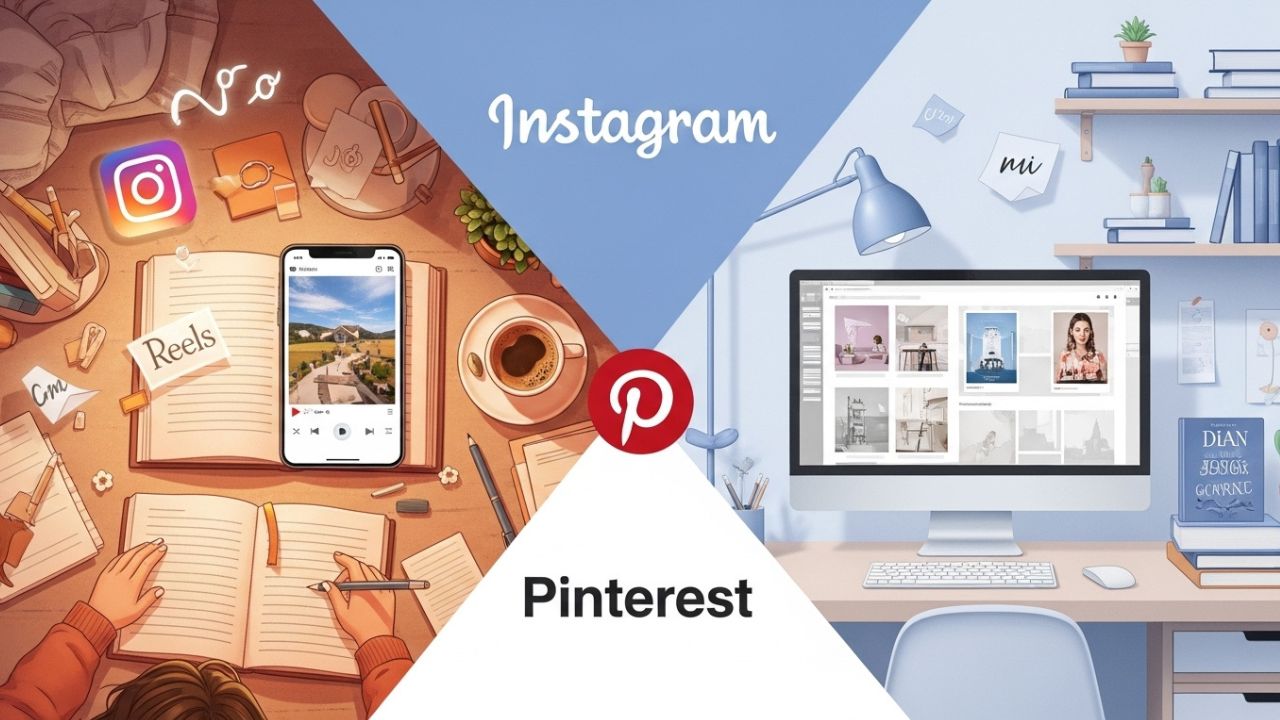
In a world where visual content dominates the digital landscape, authors are no longer just wordsmiths — they’re also visual storytellers. Whether you’re a novelist, poet, or nonfiction writer, building an online presence goes far beyond writing compelling words. Readers today are drawn to aesthetic experiences, not just text.
That’s where visual platforms like Instagram and Pinterest step in. Both are powerhouses for creative professionals — and both can help authors showcase their work, reach new audiences, and establish a recognizable brand identity. But which one should you focus on? 🤔
To answer that, we’ll dive deep into a strategic comparison between Instagram and Pinterest, analyzing how each platform serves authors, what types of content work best, and how you can develop a sustainable marketing strategy that reflects your literary voice.
1. Understanding the Core of Visual Marketing for Writers 📸
Visual marketing is the art of using imagery, color, and design to communicate your message. For authors, it’s not just about selling books — it’s about selling emotion, imagination, and identity.
Think about it:
- When readers see your book cover, they instantly form a feeling.
- When they view your Instagram feed, they should sense your tone — dark and mysterious? Whimsical and dreamy? Intellectual and minimalist?
- Every visual choice you make becomes part of your author brand.
In this sense, Instagram and Pinterest aren’t just “social media platforms.” They’re visual storytelling tools.
2. Instagram: The Author’s Digital Stage 🎭
What Makes Instagram Powerful
Instagram is the modern author’s “digital stage.” With over a billion users, it offers an immersive way to connect through visual storytelling, live interaction, and narrative-driven posts.
For authors, Instagram is ideal because:
- It’s community-oriented — you can build genuine relationships with readers, other writers, and publishers.
- It supports rich content types — from static posts and carousels to Reels and Stories.
- It offers personal branding tools, including bio links, highlights, and collaboration tags.
How Authors Use Instagram Effectively
Here are some proven strategies authors use to stand out:
| Strategy | Description | Example |
|---|---|---|
| 📚 Book Aesthetics | Create posts showing your book’s color palette, tone, or setting. | “A coffee-stained notebook, ink pen, and candlelight vibe” for a poetry account. |
| ✍️ Writing Process Posts | Share behind-the-scenes glimpses into writing sessions. | Timelapse videos of writing drafts, mood boards, or research notes. |
| 🎥 Reels & Short Videos | Turn key quotes or lines into short videos with music. | “3 lines from my novel that define heartbreak.” |
| 💬 Author-Reader Interaction | Use Stories or comments to ask for opinions or share quotes. | “What character would you invite for coffee?” |
| 🧠 Educational Posts | Share writing tips, grammar advice, or literary insights. | Carousel: “5 ways to make your dialogue sound real.” |
Instagram thrives on authenticity + creativity. You don’t need to be a professional photographer — your phone and your imagination are enough.
3. Pinterest: The Author’s Digital Library 📌
What Makes Pinterest Unique
Pinterest is not a social network in the traditional sense. It’s a visual search engine. Users come here to discover, organize, and plan — not to chat.
This makes Pinterest ideal for evergreen marketing — content that continues to bring traffic long after it’s posted.
For authors, Pinterest is like an archive where your visuals can drive book sales, newsletter subscriptions, and website visits for years.
How Authors Can Leverage Pinterest
| Strategy | Description | Example |
|---|---|---|
| 📖 Pin Your Book Covers | Each book cover becomes a visual pin that links to your sales page. | “Fantasy novel with dragons and Celtic mythology.” |
| 🧩 Create Story Mood Boards | Each board reflects your book’s universe. | “Victorian London + mystery + romance” board for inspiration. |
| ✍️ Writing Tips & Blog Pins | Share value-rich infographics or blog teasers. | “How to write realistic villains.” |
| 🌿 Author Branding Boards | Create a consistent aesthetic that defines you as an author. | “Dark academia author aesthetic.” |
| 🔗 Link Building | Every pin drives traffic to your blog, Amazon author page, or newsletter. | “Read the full short story on my website.” |
Pinterest isn’t about interaction, it’s about inspiration. While Instagram rewards frequent engagement, Pinterest rewards consistency and search optimization.
4. Instagram vs. Pinterest: The Comparison Table 📊
| Feature | ||
|---|---|---|
| 🎯 Purpose | Social networking and storytelling | Visual discovery and long-term traffic |
| 🕒 Content Lifespan | 48 hours to 7 days | Months to years |
| 💬 Audience Interaction | High (comments, DMs, live chats) | Low (saves, clicks) |
| 🧭 Algorithm Focus | Engagement, relevance, relationships | Keywords, pin quality, SEO |
| 📈 Growth Speed | Fast but requires constant activity | Slow but steady and lasting |
| 💡 Best Content for Authors | Reels, carousels, Stories | Infographics, book covers, aesthetic boards |
| 📚 Branding Focus | Personality & connection | Consistency & discoverability |
| 💰 Traffic Conversion | Moderate — harder to send users off-platform | High — direct link traffic to external sites |
| 🧠 Ideal for | Authors who love social interaction and storytelling | Authors who love curation and content planning |
5. Choosing the Right Platform for Your Author Brand ⚖️
The ideal platform depends on your goals, personality, and content style. Let’s explore a few common author profiles to see which fits best:
A. The Storyteller (Instagram-Focused) 📖
- Loves sharing writing updates and emotional reflections.
- Enjoys interacting with readers.
- Likes experimenting with Reels and visual quotes.
- Example: A contemporary romance author who posts “writing vlogs” and motivational captions.
B. The Strategist (Pinterest-Focused) 📌
- Prefers creating polished, evergreen content.
- Enjoys organizing visual boards.
- Focuses on driving traffic to a website or newsletter.
- Example: A nonfiction author who writes self-help blogs and uses Pinterest for SEO-driven pins.
C. The Hybrid Author (Both Platforms) 🌗
- Uses Instagram for storytelling and community.
- Uses Pinterest for long-term discoverability.
- Example: A fantasy writer who posts reels about character creation on Instagram and pins world-building boards on Pinterest.
6. Visual Consistency: The Hidden Key to Success 🔑
Whether you use Instagram, Pinterest, or both — the secret weapon is visual consistency.
Here’s how to achieve it:
| Element | Tip | Why It Matters |
|---|---|---|
| 🎨 Color Palette | Choose 3–4 signature colors. | Builds recognition instantly. |
| ✍️ Typography | Use one or two fonts for all visuals. | Keeps content cohesive. |
| 🖼️ Photography Style | Pick a tone: warm, moody, bright, minimalist. | Creates emotional continuity. |
| 🧭 Logo or Signature | Add subtle branding to each post or pin. | Enhances professionalism. |
✨ Pro tip: Tools like Canva or Adobe Express let you create templates for both platforms, saving time and ensuring harmony.
7. Understanding the Algorithms 🧩
Instagram Algorithm
Instagram rewards:
- Engagement rate (likes, comments, shares, saves)
- Consistency (posting frequency)
- Relevance (how your content matches user interests)
- Relationships (interaction with followers)
That means your captions, hashtags, and interactions all matter.
To boost visibility:
- Post Reels regularly (they’re favored by the algorithm).
- Use niche hashtags (#authorlife, #writersofinstagram).
- Engage with others — replies and DMs strengthen your reach.
Pinterest Algorithm
Pinterest rewards:
- Keyword optimization (titles, descriptions, board names)
- Pin quality (resolution, design clarity)
- Consistency (steady pinning activity)
- Engagement signals (saves, clicks)
For authors:
- Use keywords like “fantasy book cover,” “writing tips,” “book lovers.”
- Include your author name in board descriptions.
- Refresh old pins with updated designs to boost SEO.
8. Content Ideas for Authors on Both Platforms 💡
Here are examples of visual content that thrive across both Instagram and Pinterest:
| Category | Instagram Example | Pinterest Example |
|---|---|---|
| 🖋️ Writing Process | Reels showing morning writing routine | Infographic: “10 Ways to Overcome Writer’s Block” |
| 📚 Book Promotion | Carousel of book quotes + reviews | Book cover pins linking to Amazon page |
| 🌿 Inspiration | Behind-the-scenes of writing desk setup | Mood board for fantasy world |
| 💬 Community | Ask followers for feedback on book titles | Board: “Favorite books that inspired my novel” |
| 🧠 Education | Writing tips via Stories | Blog graphic linking to long-form article |
By repurposing your content, you can double your impact with minimal extra effort.
9. Time Management for Authors Using Visual Platforms ⏰
One major challenge for authors is time. You want to write, not spend hours crafting posts.
Here’s a suggested weekly workflow that balances creativity and productivity:
| Day | Task | Platform |
|---|---|---|
| Monday | Design 3–4 new Pins | |
| Tuesday | Film one short Reel | |
| Wednesday | Schedule posts via Meta Planner | |
| Thursday | Engage with followers (15–20 minutes) | |
| Friday | Update Pinterest boards | |
| Weekend | Review analytics + brainstorm next week’s content | Both |
Automation tools like Later, Tailwind, or Buffer can help manage both platforms efficiently.
10. Measuring Success: Analytics for Authors 📊
What gets measured gets improved.
Instagram Metrics to Watch:
- Reach (how many people see your content)
- Engagement rate
- Saves and shares (indicate deep interest)
- Profile clicks and link taps (conversion rate)
Pinterest Metrics to Track:
- Impressions (visibility of your pins)
- Saves (content relevance)
- Outbound clicks (traffic generation)
- Top-performing boards (content themes that resonate)
Use these insights to refine your strategy — post more of what works, less of what doesn’t.
11. Monetization Opportunities 💰
Visual platforms can become profitable tools for authors:
| Strategy | Description | Platform |
|---|---|---|
| 📗 Direct Book Sales | Use visuals to link directly to your book pages. | |
| ✉️ Newsletter Growth | Offer freebies (like a writing guide) via link in bio or pin. | Both |
| 💼 Author Services | Promote editing, coaching, or workshops. | |
| 🎙️ Speaking Engagements | Use professional visuals to attract event organizers. | Both |
| 🎁 Affiliate Links | Share recommended writing tools or books. |
The key is subtlety: visual storytelling first, selling second.
12. Emotional Connection Through Imagery 💞
Never underestimate the emotional impact of visuals.
A beautifully composed image can:
- Evoke nostalgia 🌙
- Spark curiosity 🔍
- Inspire creativity 🌸
When you share your author journey — your messy drafts, your coffee rituals, your reading nooks — readers feel like part of your story.
That’s why both Instagram and Pinterest are invaluable: they transform writing from a solitary art into a shared experience.
13. The Future of Visual Marketing for Authors 🚀
With new AI design tools, AR filters, and immersive visuals, the next decade of author branding will blend text, sound, and imagery like never before.
Imagine:
- AI-generated book trailers from text excerpts.
- Interactive “mood boards” readers can explore.
- 3D book cover previews on Pinterest.
Authors who embrace these tools early will stay ahead in a visually driven marketplace.
Conclusion: Which Platform Wins? 🏁
There’s no one-size-fits-all answer.
- Choose Instagram if you value community, personality, and real-time storytelling.
- Choose Pinterest if you value searchability, longevity, and steady web traffic.
- Use both if you want to combine the best of both worlds — connection and discovery.
At the heart of it all lies one truth:
✨ Visual storytelling is the modern author’s superpower. ✨
So whether you’re pinning your dreams on Pinterest or sharing your progress on Instagram, remember — every image, every caption, every post is part of your evolving literary legacy.
🌟 Bonus Tip: The “Dual Platform Formula” for Authors
- Create a Pinterest board for each of your books (aesthetic, character boards).
- Turn highlights of those boards into Instagram carousel posts.
- Use Pinterest descriptions to link back to your Instagram profile.
- Cross-promote with unified hashtags like #AuthorLife #WritersOfInstagram #BookLovers.
That’s how you turn words into worlds — and visuals into lasting impressions. 🌍📖
Leave a Reply