
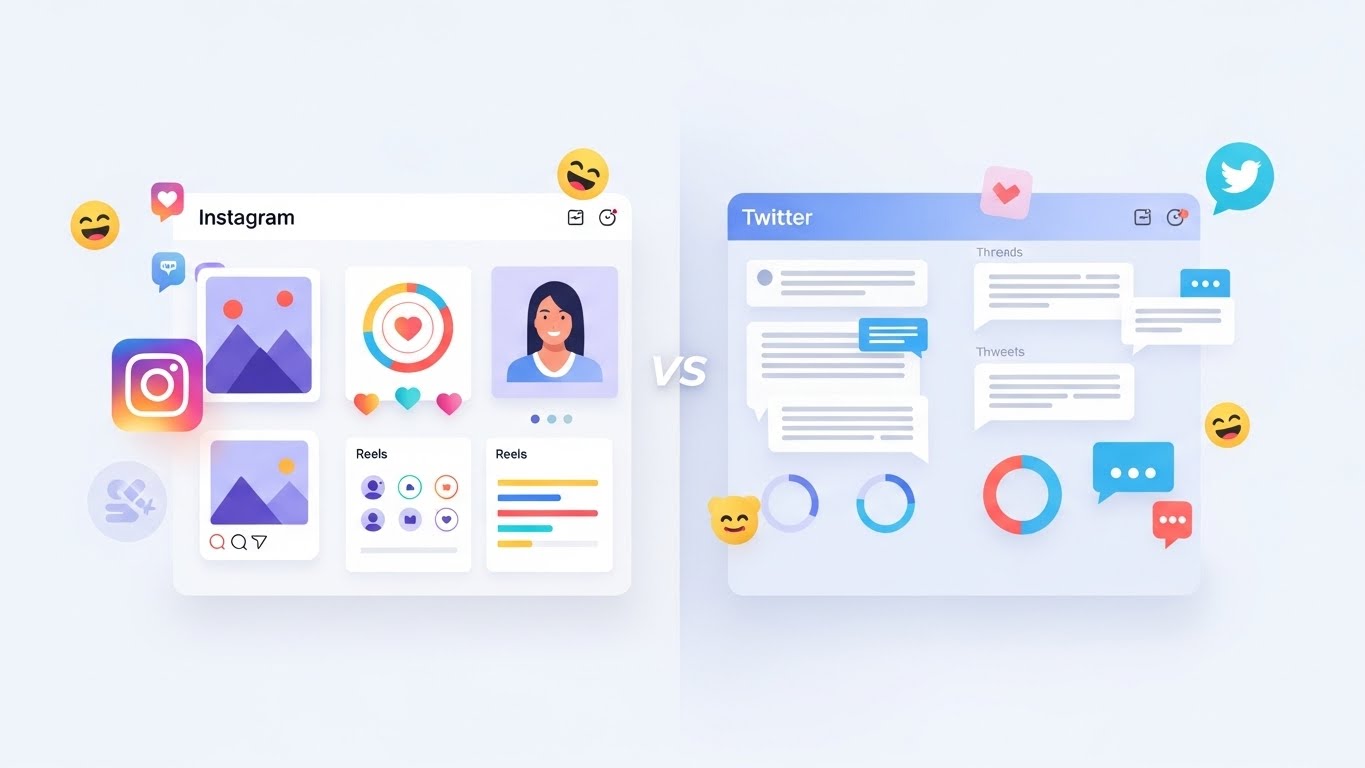
In the ever-evolving world of social media, engagement has become the primary currency of success. Likes, comments, shares, saves, reposts, clicks, and conversations all serve as signals that content resonates with an audience. Among the many platforms competing for attention, Instagram and Twitter stand out as two of the most influential yet fundamentally different ecosystems.
While both platforms aim to connect people and ideas, their engagement mechanics, user expectations, content formats, and algorithmic priorities vary significantly. Understanding these differences is critical for brands, creators, entrepreneurs, journalists, and marketers who want to maximize impact rather than simply post content and hope for results.
This article explores, in depth, how engagement works on Instagram and Twitter, how strategies differ, and how to design content that thrives on each platform. We will examine psychology, algorithms, content formats, timing, community behavior, analytics, and future trends—without relying on external sources—offering a rich, practical, and strategic comparison.
1. Defining Engagement: What It Really Means 🤝
Before comparing platforms, it is essential to define engagement beyond surface-level metrics.
Core Engagement Signals
Engagement typically includes:
- ❤️ Likes / Favorites
- 💬 Comments / Replies
- 🔁 Shares / Retweets / Reposts
- 📌 Saves / Bookmarks
- ⏱️ Time spent on content
- 🔗 Link clicks
- 👥 Follows and profile visits
However, not all engagement is equal. A comment often signals deeper cognitive involvement than a like, while a share indicates social endorsement.
Engagement as a Relationship Metric
Engagement is less about vanity numbers and more about:
- Trust
- Relevance
- Emotional resonance
- Community participation
- Habit formation
Instagram and Twitter interpret and reward these behaviors differently, shaping how users create and consume content.
2. Platform DNA: Visual vs. Conversational 🧬
Instagram’s Visual-First Identity
Instagram is built around visual storytelling. Images, videos, aesthetics, and mood dominate the experience. Engagement is often emotional, aspirational, and sensory.
Key traits:
- High emphasis on design and visuals
- Strong creator culture
- Slower, more deliberate consumption
- Engagement driven by inspiration and identity
Twitter’s Conversation-First Identity
Twitter thrives on real-time conversation. It is fast, reactive, opinion-driven, and text-centric.
Key traits:
- Speed and immediacy
- Strong news and commentary presence
- Engagement through dialogue and debate
- High virality potential with low production cost
3. Algorithmic Priorities and Their Impact 🤖
Instagram Algorithm: Relationship and Retention
Instagram’s algorithm prioritizes:
- Past interactions between users
- Content format performance (Reels, Stories, Posts)
- Watch time and completion rates
- Saves and shares
- Consistency and posting behavior
This encourages:
- High-quality visuals
- Longer attention retention
- Series-based content
- Strong personal branding
Twitter Algorithm: Relevance and Velocity
Twitter’s algorithm values:
- Timeliness
- Engagement velocity (how fast interactions happen)
- Replies and quote tweets
- Network relevance
- Topic and keyword alignment
This encourages:
- Frequent posting
- Trend participation
- Strong opinions
- Conversational hooks
4. Content Formats and Engagement Potential 🎨✍️
Instagram Content Formats
| Format | Engagement Strength | Best Use Case |
|---|---|---|
| Feed Posts | Medium–High | Branding, storytelling |
| Carousels | High | Education, step-by-step |
| Reels 🎥 | Very High | Discovery and reach |
| Stories | Medium | Daily interaction, polls |
| Lives 🔴 | High | Deep community bonding |
Carousels and Reels often outperform static images because they increase time spent and interaction depth.
Twitter Content Formats
| Format | Engagement Strength | Best Use Case |
|---|---|---|
| Single Tweets | Medium | Opinions, announcements |
| Threads 🧵 | Very High | Education, storytelling |
| Replies | High | Relationship building |
| Polls 📊 | Medium | Quick interaction |
| Spaces 🎙️ | High | Long-form conversation |
Threads are particularly powerful, turning short-form text into long-form narratives that encourage scrolling and replies.
5. Emotional Triggers and Psychology 🧠💥
Instagram: Aspiration and Identity
Instagram engagement is driven by:
- Aesthetic pleasure ✨
- Lifestyle aspiration 🌴
- Self-expression 🎭
- Belonging to a niche community
Successful content often answers:
“Does this represent who I am or who I want to be?”
Twitter: Curiosity and Opinion
Twitter engagement thrives on:
- Curiosity ❓
- Humor 😄
- Outrage 😡
- Insight 💡
- Contrarian takes ⚡
Successful tweets often answer:
“Is this interesting, surprising, or worth responding to?”
6. Posting Frequency and Timing ⏰
Instagram Strategy
- Quality > quantity
- 3–5 feed posts per week
- Daily Stories
- Reels 2–4 times per week
Overposting can reduce reach if engagement drops.
Twitter Strategy
- Quantity supports quality
- 3–10 tweets per day
- Multiple threads per week
- Active replies to others
Silence on Twitter often equals invisibility.
7. Community Building Approaches 🧑🤝🧑
Instagram Communities
Instagram communities are often:
- Niche-focused
- Creator-centric
- Built through DMs, comments, and Stories
- Emotionally supportive
Tactics:
- Replying to comments
- Using question stickers
- Featuring followers
- Consistent tone and visuals
Twitter Communities
Twitter communities are:
- Topic-based
- Conversation-driven
- Less hierarchical
- Built through public dialogue
Tactics:
- Replying publicly
- Quoting others
- Hosting Spaces
- Participating in trends
8. Hashtags vs. Keywords 🔍
Instagram Discovery
- Hashtags act as discovery channels
- Niche hashtags outperform broad ones
- 3–10 relevant hashtags are usually optimal
Twitter Discovery
- Keywords and topics matter more than hashtags
- Hashtags are useful for events or movements
- Natural language often performs better
9. Analytics and Measuring Success 📊
Instagram Metrics That Matter
- Reach vs. followers
- Saves per post
- Shares per post
- Reel watch time
- Profile actions
Twitter Metrics That Matter
- Impressions
- Engagement rate
- Replies per tweet
- Profile clicks
- Follower growth velocity
10. Monetization and Engagement 💰
Instagram Monetization
Engagement supports:
- Brand deals
- Affiliate marketing
- Product launches
- Subscriptions
- Creator funds
Visual trust and consistency are critical.
Twitter Monetization
Engagement supports:
- Thought leadership
- Consulting and services
- Newsletters
- Subscriptions
- Sponsorships
Credibility and voice matter more than aesthetics.
11. Common Engagement Mistakes 🚫
On Instagram
- Over-editing content
- Chasing trends without relevance
- Ignoring comments
- Inconsistent branding
On Twitter
- Only self-promotion
- Lack of replies
- Posting without context
- Being overly generic
12. Cross-Platform Strategy 🔄
Rather than choosing one platform, many creators repurpose content:
| Instagram Content | Twitter Adaptation |
|---|---|
| Carousel | Thread |
| Reel | Short opinion tweet |
| Story Q&A | Poll |
| Caption | Insightful tweet |
However, copy-paste rarely works. Native adaptation is essential.
13. Future Trends in Engagement 🚀
Instagram Trends
- More short-form video
- Private engagement (DMs, Close Friends)
- Community-focused features
- Creator-led monetization
Twitter Trends
- Long-form content growth
- Audio and live discussions
- Algorithmic personalization
- Creator subscriptions
Conclusion: Choosing the Right Engagement Strategy 🎯
Instagram and Twitter reward different types of attention.
- Instagram excels at visual storytelling, emotional connection, and brand building.
- Twitter dominates conversation, speed, and intellectual engagement.
The best engagement strategy is not about choosing the “better” platform, but about aligning:
- Your goals
- Your strengths
- Your audience’s expectations
Creators and brands who understand platform psychology—and respect it—will always outperform those who chase metrics blindly.
Engagement is not a hack.
It is a relationship. ❤️
Leave a Reply