
The world of sales has changed dramatically over the past two decades. Traditional sales techniques that once relied heavily on cold calls, aggressive advertising, and scripted persuasion are increasingly ineffective in a world where consumers are more informed, more skeptical, and more protective of their attention.
Today, people spend a significant portion of their time on social platforms, messaging apps, and online communities. These digital spaces have created a new opportunity for businesses and professionals: the ability to build authentic relationships with potential customers before ever making a sales pitch.
This approach is known as Social Selling.
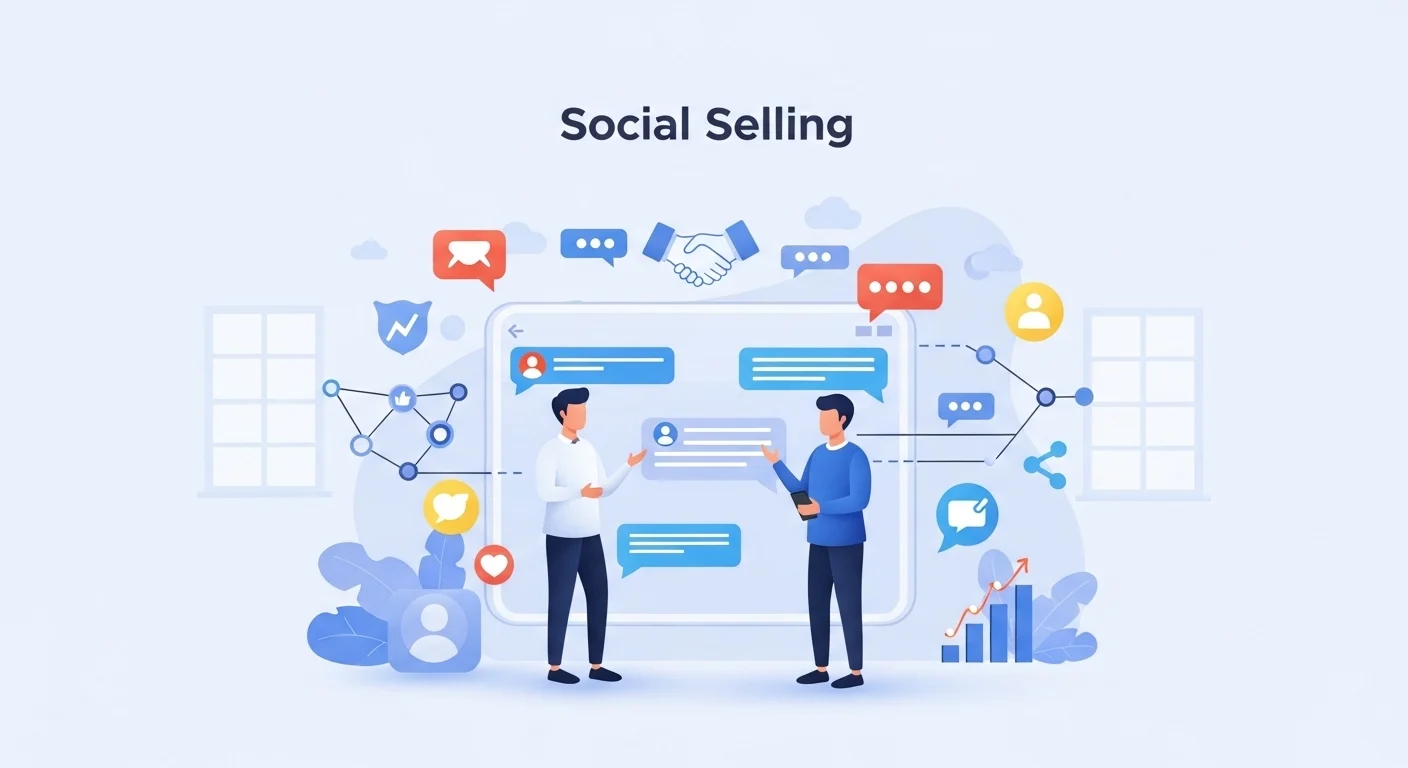
At its core, social selling is the practice of using social networks, digital conversations, and online presence to build relationships that eventually lead to sales. Instead of pushing products aggressively, social sellers focus on creating trust, providing value, and nurturing connections.
However, there is a delicate balance involved.
Many professionals attempt social selling but end up doing the opposite: spamming people with unsolicited messages, copy-pasted pitches, and automated outreach. This behavior quickly damages credibility and causes potential customers to disengage.
True social selling is not about sending more messages.
It is about having better conversations.
And perhaps the most important skill in this new landscape is the ability to sell in Direct Messages (DMs) without being intrusive.
This article explores the psychology, strategies, and best practices behind non-intrusive social selling. It will provide practical frameworks, examples, and methods for building genuine relationships that naturally lead to business opportunities.
1. What Is Social Selling?
Social selling is a modern sales strategy where professionals use social media platforms to connect with potential customers, nurture relationships, and eventually guide them toward a purchase.
Instead of focusing on transactions, social selling focuses on relationships.
Traditional Sales vs Social Selling
| Aspect | Traditional Sales | Social Selling |
|---|---|---|
| First contact | Cold calls or ads | Organic interaction |
| Communication style | Persuasive | Conversational |
| Focus | Product | Customer |
| Relationship | Short-term | Long-term |
| Trust building | After purchase | Before purchase |
| Channel | Phone, email | Social media, messaging |
The biggest difference lies in timing.
Traditional sales approaches try to sell immediately.
Social selling takes time to earn the right to sell.
Why Social Selling Works
There are several psychological reasons why social selling is effective.
1️⃣ Trust is built gradually
When people see your posts, comments, and interactions over time, they begin to feel familiar with you.
2️⃣ People buy from people
Human beings prefer to buy from individuals they like and trust rather than from anonymous brands.
3️⃣ Conversations reduce resistance
A conversation feels less like a sales process and more like a relationship.
4️⃣ Social proof is visible
Likes, comments, and testimonials reinforce credibility.
2. Why Direct Messages Are Powerful in Social Selling
Direct messages are one of the most powerful tools in social selling.
Unlike public posts, DMs allow:
- personalized communication
- deeper conversations
- real-time responses
- relationship development
However, DMs are also where most social sellers make mistakes.
People often treat DMs like email marketing.
They send:
❌ generic messages
❌ copy-paste scripts
❌ immediate sales offers
❌ automated sequences
The result?
People feel interrupted.
The key principle is simple:
A DM should feel like a conversation, not a campaign.
3. The Psychology of Intrusion
Before learning how to sell in DMs, it is essential to understand why people feel annoyed by certain messages.
Humans are extremely sensitive to social signals.
When someone sends a message that feels transactional or self-serving, the brain activates defensive resistance.
Signs of an Intrusive Message
| Signal | Perception |
|---|---|
| Immediate pitch | “They only want my money” |
| Long scripted text | “This is automated spam” |
| No personalization | “They didn’t even look at my profile” |
| Multiple follow-ups | “They are desperate” |
| Links in first message | “They are selling something” |
When these signals appear, the receiver feels like a target rather than a person.
And nobody likes feeling like a target.
4. The Golden Rule of Social Selling
The most important rule is simple:
⭐ Connection first. Conversion later.
A relationship should always precede a sales conversation.
Think of social selling like networking at an event.
Imagine walking into a conference and someone immediately says:
“Hi, nice to meet you. Buy my product.”
It would feel strange.
But imagine someone saying:
“Hi, I saw your talk earlier. Really interesting point about digital marketing.”
That feels natural.
Social selling follows the same logic.
5. The Social Selling Funnel
Social selling can be visualized as a relationship funnel rather than a sales funnel.
The Social Relationship Funnel
| Stage | Objective | Action |
|---|---|---|
| Visibility | Be seen | Post valuable content |
| Engagement | Start interaction | Comment, like, reply |
| Connection | Build familiarity | Follow or connect |
| Conversation | Build trust | Direct messages |
| Opportunity | Identify needs | Offer help |
| Conversion | Make sale | Present solution |
Notice that the sale is the final stage, not the first.
Many people attempt to jump directly from connection → sale, skipping trust entirely.
That is why their messages fail.
6. The 4-Step Framework for Non-Intrusive DMs
A simple framework can help structure conversations naturally.
Step 1: Context
Start with context so the person knows why you are messaging them.
Example:
“Hey Sarah, I saw your comment on the post about remote teams. Your point about communication was really interesting.”
This removes suspicion.
Step 2: Appreciation
Recognize something specific about them.
Example:
“I checked your profile and saw you manage distributed teams. That’s impressive.”
This shows authenticity.
Step 3: Conversation
Ask an open-ended question.
Example:
“What tools do you usually use to manage remote collaboration?”
Questions invite dialogue.
Step 4: Transition
Only later, if appropriate, introduce business.
Example:
“If you’re ever exploring tools for that, I work with companies facing similar challenges.”
Notice something important.
There is no pressure.
7. The Role of Content in Social Selling
One of the biggest misunderstandings about social selling is believing that DMs alone generate sales.
In reality, content does most of the work.
When someone receives a message from you, they often check your profile.
Your posts become your digital reputation.
Good Social Selling Content
Effective content typically includes:
- insights
- stories
- lessons
- educational tips
- case studies
- personal experiences
Content vs Sales Posts
| Type | Purpose | Effect |
|---|---|---|
| Educational | Teach something | Builds authority |
| Storytelling | Share experiences | Builds emotional connection |
| Opinion | Share perspective | Builds identity |
| Case studies | Show results | Builds credibility |
| Direct sales | Promote offer | Generates action |
A good rule of thumb:
📊 80% value, 20% promotion
8. Listening: The Most Underrated Sales Skill
Many sales professionals focus too much on speaking.
But the most successful social sellers are excellent listeners.
In digital conversations, listening means:
- reading carefully
- asking clarifying questions
- understanding pain points
- recognizing motivations
Instead of pushing a solution, great sellers diagnose problems first.
Example:
❌ “I help companies grow their revenue.”
Better:
✔ “What are the biggest challenges you’re facing in your sales process?”
The difference is enormous.
9. Personalization: The Secret to Meaningful DMs
Personalization is what separates real social selling from spam.
A personalized message references something specific about the person.
Possible personalization sources include:
- their recent post
- their job role
- their industry
- their company
- a mutual connection
- an event they attended
Personalization Examples
| Weak Message | Strong Message |
|---|---|
| “Hi, I help businesses grow.” | “Hi Alex, I saw your post about scaling startups.” |
| “I have a solution for you.” | “Your team seems to be growing quickly.” |
| “Let me show you our software.” | “Are you currently using a CRM system?” |
Small details create big differences in perception.
10. The Power of Curiosity
Curiosity is a powerful psychological driver.
When people feel curious, they become more engaged.
In social selling, curiosity can be used in subtle ways.
Example:
“I’ve been noticing something interesting about how many companies manage remote teams…”
This type of statement invites further conversation.
But curiosity should not be manipulative.
Authenticity always wins in the long run.
11. Timing Matters
Sending the right message at the wrong time can still fail.
Timing is an overlooked element of social selling.
Good Timing Indicators
- someone commented on your post
- someone liked several posts
- someone followed you recently
- someone asked a question publicly
- someone downloaded your content
These signals indicate interest.
When interest exists, DMs feel natural.
Without interest, they feel intrusive.
12. Building Long-Term Relationships
One of the most powerful aspects of social selling is relationship longevity.
Not every conversation should lead to a sale immediately.
Sometimes relationships take months or years to convert.
Long-Term Social Selling Strategy
| Action | Frequency |
|---|---|
| Comment on posts | Weekly |
| Share helpful resources | Occasionally |
| Congratulate achievements | When relevant |
| Check in periodically | Every few months |
This approach keeps the relationship alive without pressure.
13. The Role of Authenticity
Authenticity is the foundation of effective social selling.
People can quickly detect insincerity.
Signs of authenticity include:
- natural language
- honest opinions
- transparent intentions
- vulnerability
- consistency
Instead of trying to sound “salesy,” focus on sounding human.
14. Ethical Social Selling
Ethics play an important role in modern sales.
Responsible social sellers avoid:
🚫 manipulation
🚫 fake scarcity
🚫 misleading claims
🚫 fake testimonials
Trust, once broken, is extremely difficult to rebuild.
Long-term success depends on integrity.
15. Metrics That Matter
Measuring social selling success requires different metrics from traditional marketing.
Social Selling Metrics
| Metric | Meaning |
|---|---|
| Engagement rate | Content relevance |
| Conversations started | Networking success |
| Response rate | Message quality |
| Relationship growth | Trust development |
| Opportunities created | Sales potential |
The most important metric is quality of relationships, not volume of messages.
16. Common Social Selling Mistakes
Many professionals sabotage their own efforts.
Top Mistakes
1️⃣ Selling too early
2️⃣ Sending generic messages
3️⃣ Ignoring responses
4️⃣ Talking too much about themselves
5️⃣ Treating people like leads instead of humans
Avoiding these mistakes dramatically improves success.
17. The Future of Social Selling
As technology evolves, social selling will become even more important.
Trends shaping the future include:
📱 messaging-first communication
🤖 AI-assisted prospect research
🎥 video messaging
🌍 global networking
📊 data-driven relationship management
Despite technological changes, one principle will remain constant:
People buy from people they trust.
Conclusion
Social selling is not about clever scripts or aggressive persuasion.
It is about building genuine relationships in digital environments.
Direct messages, when used correctly, are not interruptions.
They are opportunities for conversation, collaboration, and connection.
The most successful social sellers understand that sales is no longer about pushing products.
It is about helping people solve problems.
When trust comes first, sales naturally follow.
And the art of selling without being intrusive becomes not just possible — but powerful. 🤝🚀
Leave a Reply