
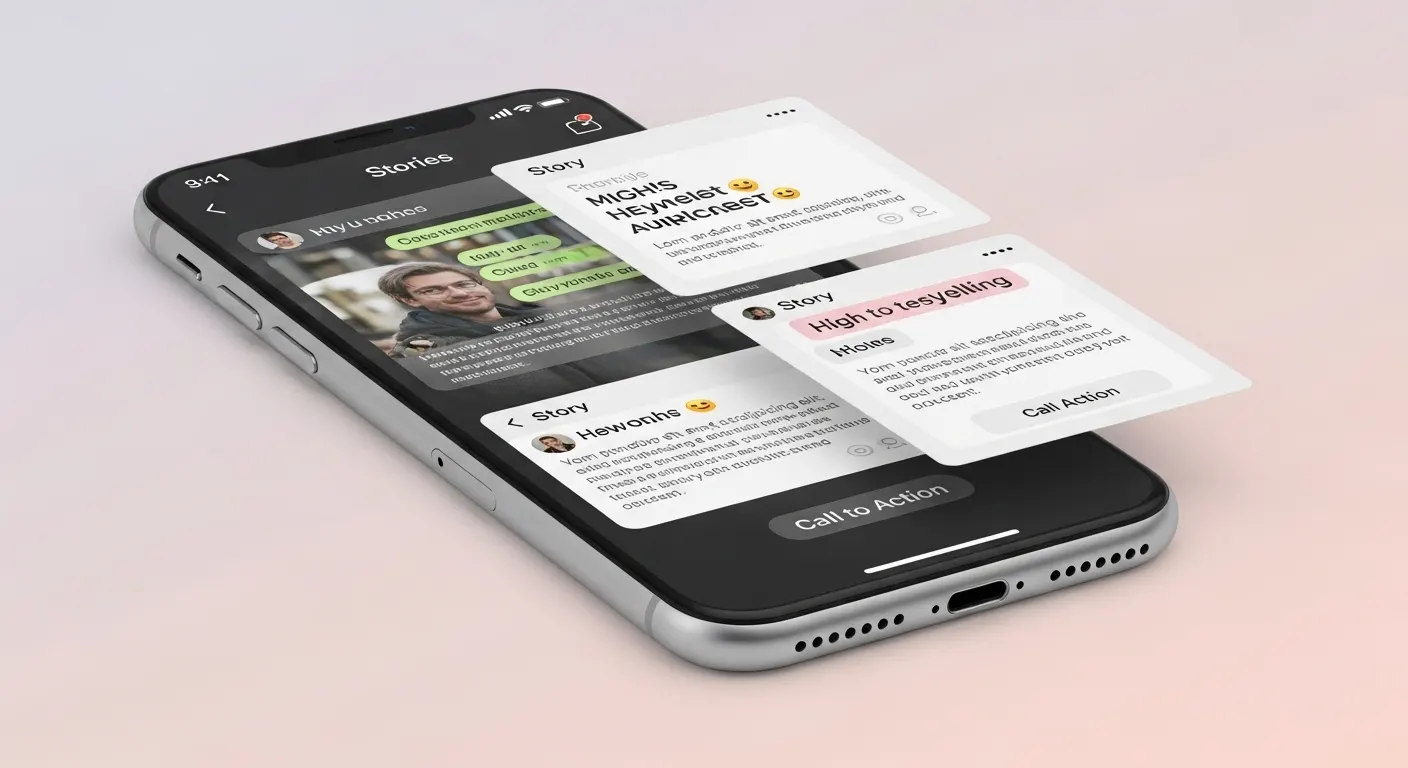
In today’s digital landscape, attention is fleeting, trust is scarce, and competition is relentless. Whether you’re a personal brand, a small business, or a global company, one truth remains constant: people trust people more than they trust brands. This is where testimonials come in—and more specifically, where testimonials in Stories become a powerful, often underutilized asset.
Stories—short, ephemeral, vertical content formats popular across platforms—have fundamentally changed how we consume information. They feel immediate, authentic, and personal. When used strategically, they become the perfect vehicle for showcasing social proof in a way that feels natural rather than promotional.
This article dives deep into the right way to post testimonials in Stories. We’ll explore psychology, strategy, formatting, storytelling techniques, mistakes to avoid, and actionable frameworks you can apply immediately.
1. Why Testimonials in Stories Work 💡
Before diving into how, let’s understand why.
1.1 The Psychology of Social Proof
Social proof is rooted in a simple idea:
When people are uncertain, they look to others to guide their decisions.
Testimonials reduce perceived risk. They answer silent questions like:
- “Will this work for me?”
- “Is this worth the money?”
- “Can I trust this brand?”
Stories amplify this because they feel:
- Real-time ⏱️
- Unpolished 🎥
- Personal 💬
1.2 Stories vs. Traditional Testimonials
| Format | Perception | Engagement | Trust Level |
|---|---|---|---|
| Website testimonials | Polished | Low | Moderate |
| Ads | Promotional | Medium | Low |
| Feed posts | Curated | Medium | Medium |
| Stories | Authentic | High | Very High |
Stories feel like “behind-the-scenes reality,” not marketing.
2. The Biggest Mistake People Make ❌
Most people treat testimonials like trophies instead of tools.
They:
- Screenshot a message
- Post it randomly
- Add “😍🔥” stickers
- Move on
This approach fails because it lacks:
- Context
- Narrative
- Emotional connection
A testimonial without context is just noise.
3. The Anatomy of a High-Converting Testimonial Story 🧩
A powerful testimonial in Stories follows a structure—not just a screenshot.
3.1 The 5-Part Framework
- Hook
- Context
- Testimonial
- Interpretation
- Call-to-Action (CTA)
Example Flow:
| Step | Content | Purpose |
|---|---|---|
| Hook | “This message stopped me today…” 😳 | Grab attention |
| Context | “She joined my program 2 weeks ago…” | Build relevance |
| Testimonial | Screenshot/video | Provide proof |
| Interpretation | “This is what happens when…” | Guide meaning |
| CTA | “Want the same result? DM ‘START’” | Drive action |
4. Types of Testimonials You Should Use 📊
Not all testimonials are equal. Variety increases credibility.
4.1 Results-Based Testimonials 📈
Focus on measurable outcomes.
Examples:
- Revenue growth
- Weight loss
- Time saved
- Skill improvement
💡 Tip: Highlight numbers visually (stickers, bold text)
4.2 Emotional Testimonials ❤️
Focus on feelings and transformation.
Examples:
- “I finally feel confident”
- “This changed my life”
- “I’m no longer overwhelmed”
These are powerful because decisions are emotional first, logical second.
4.3 Objection-Handling Testimonials 🧠
Address doubts indirectly.
Examples:
- “I thought it was too expensive, but…”
- “I was skeptical at first…”
These reduce friction for new buyers.
4.4 Relatable Testimonials 👥
Show people similar to your audience.
Examples:
- Same age group
- Same profession
- Same struggle
People think:
“If it worked for them, it can work for me.”
4.5 Micro Testimonials ⚡
Short, punchy reactions.
Examples:
- “INSANE results 🤯”
- “Worth every penny”
- “Game changer”
Use these as supporting proof, not main content.
5. Formatting Testimonials for Stories 🎨
Presentation matters as much as content.
5.1 Screenshot vs. Native Text
| Format | When to Use | Advantage |
|---|---|---|
| Screenshot | Real messages | Authenticity |
| Native text | Storytelling | Clarity |
| Video testimonial | Strong proof | Emotional impact |
💡 Best practice: Combine them.
5.2 Design Principles
Keep It Clean 🧼
Avoid clutter:
- Too many stickers
- Too many fonts
- Too many colors
Highlight Key Phrases ✨
Use:
- Circles
- Underlines
- Arrows
Guide the viewer’s eye.
5.3 Use Contrast for Readability
Bad:
- Light text on light background
Good:
- Dark overlay + white text
6. Turning Testimonials Into Stories (Literally) 📖
A testimonial is not just proof—it’s a story.
6.1 The Before–After–Bridge Model
| Stage | Content |
|---|---|
| Before | Problem |
| After | Result |
| Bridge | Your solution |
Example:
- Before: “I was stuck at 1k/month”
- After: “Now I’m making 5k/month”
- Bridge: “After applying this strategy…”
6.2 Add Your Voice
Don’t just post—interpret.
Say things like:
- “This is why consistency matters”
- “Most people quit before this point”
- “This is what I teach inside my program”
You become the guide, not just the messenger.
7. Sequencing Stories for Maximum Impact 🎯
One story is good. A sequence is powerful.
7.1 The 4-Story Sequence
Story 1 — Hook 👀
“People think results like this take years…”
Story 2 — Context 📌
“This client started with zero experience…”
Story 3 — Proof 📸
Screenshot or video
Story 4 — CTA 🚀
“Want this too? DM me ‘RESULTS’”
7.2 The “Proof Stack” Strategy
Post multiple testimonials in a row.
Why it works:
- Builds momentum
- Increases credibility
- Creates “everyone is doing this” effect
⚠️ But:
Add variety, not repetition.
8. Timing and Frequency ⏰
8.1 How Often Should You Post?
| Frequency | Effect |
|---|---|
| Rarely | Missed opportunities |
| Daily | Strong brand trust |
| Overposting | Audience fatigue |
💡 Ideal: 1–3 testimonial sequences per day (if you have volume)
8.2 When to Post Testimonials
Best moments:
- Before launching an offer
- During a promotion
- After delivering results
- When objections arise
9. Advanced Strategies 🔥
9.1 Turn Testimonials Into Mini Case Studies
Instead of one screenshot:
Break it into multiple stories:
- Who is the person?
- What was the problem?
- What did they do?
- What happened?
9.2 Use Video Testimonials 🎥
Video = highest trust level.
Tips:
- Keep it short (15–30 seconds)
- Add captions
- Highlight key moments
9.3 Add Interactive Elements
Use:
- Polls (“Do you want results like this?”)
- Questions (“What’s your biggest struggle?”)
- Sliders (“How impressed are you?” 😮)
This boosts engagement and algorithm reach.
9.4 Pin Your Best Testimonials 📌
Save them in Highlights:
- “Results”
- “Reviews”
- “Success Stories”
This creates a permanent trust layer.
10. Common Mistakes to Avoid 🚫
10.1 Posting Without Context
A random message means nothing.
10.2 Over-Editing
Too polished = less believable.
10.3 Fake or Exaggerated Testimonials
This destroys trust permanently.
10.4 Ignoring Negative Feedback
Not all testimonials need to be perfect.
Sometimes this is powerful:
“It was hard at first, but worth it.”
10.5 No Call-to-Action
Without CTA:
👉 You lose conversions.
11. Ethical Considerations ⚖️
Always:
- Ask permission
- Blur sensitive information
- Avoid misleading claims
Trust is your most valuable asset.
12. A Practical Template You Can Use Today 🧰
Here’s a plug-and-play structure:
Story 1:
“Most people struggle with this…” 😬
Story 2:
“This client felt the same way…”
Story 3:
(Screenshot or video testimonial)
Story 4:
“This is what changed everything…”
Story 5:
“If you want the same result, DM me ‘START’ 🚀”
13. The Long-Term Impact of Testimonial Stories 🌱
When done consistently, testimonial Stories:
- Build authority
- Increase conversions
- Shorten sales cycles
- Strengthen brand loyalty
They turn your audience from:
👉 Skeptical viewers
into
👉 Confident buyers
14. Final Thoughts 💭
Testimonials in Stories are not just about showing results—they’re about telling transformation stories in real time.
The difference between average and high-converting content is not the testimonial itself, but how you present it.
Remember:
✔ Add context
✔ Guide interpretation
✔ Create a narrative
✔ Include a CTA
✔ Stay authentic
When you master this, your Stories stop being content—and start becoming conversion machines.
Leave a Reply